
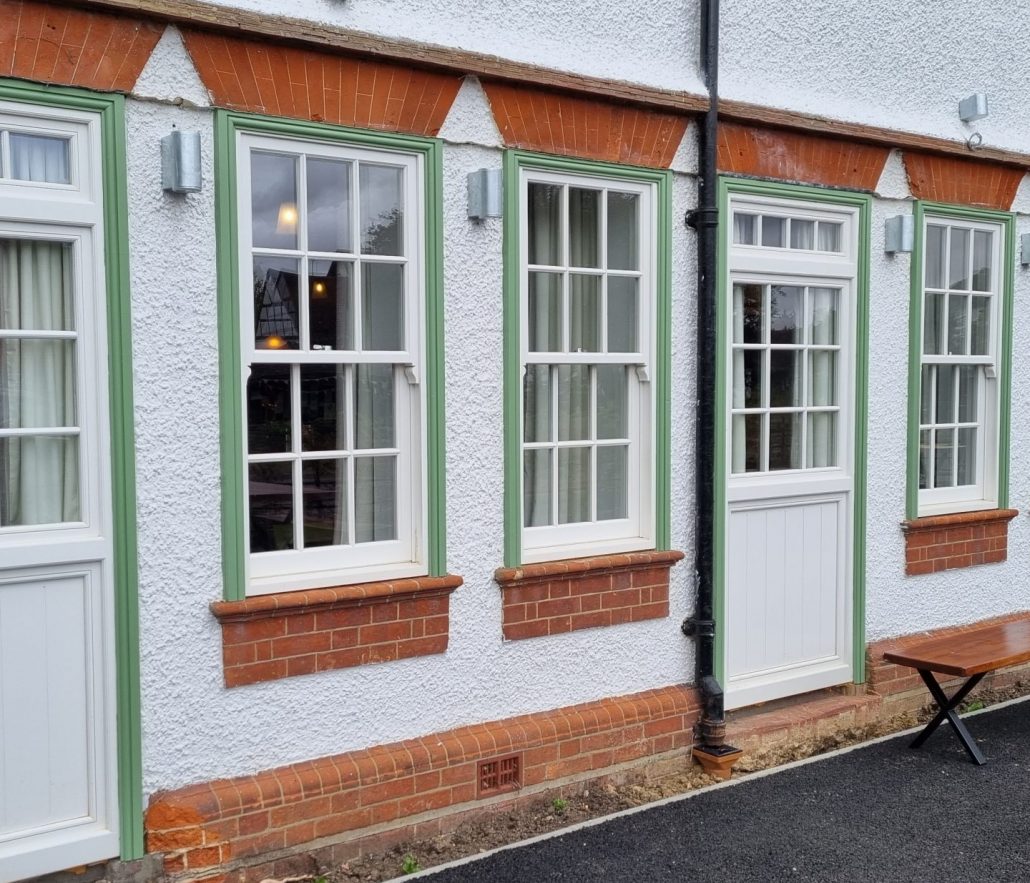
Georgian Windows: The Definitive 6-Over-6 Design Guide
In this article, you’ll discover:
- What defines authentic Georgian window proportions and why they matter
- The history behind the iconic six-over-six glazing pattern
- Why slim glazing bars are essential for period accuracy
- How to spot common mistakes in Georgian window replacements
- The truth about sash horns and when they appeared
- Restoration standards for listed Georgian properties
Introduction
Walk down any Georgian terrace in Bath, Edinburgh, or Dublin, and you’ll notice something striking: the windows. Tall, elegant, perfectly proportioned — they’re as much a part of Georgian architecture as the symmetrical facades they sit within.
But here’s what many homeowners don’t realise. Those beautiful six-over-six sash windows weren’t just decorative choices. They were engineering solutions, born from the limitations of 18th-century glass manufacturing. And getting them right — whether you’re restoring originals or installing replacements — requires understanding why Georgians built them the way they did.
We’ve seen countless replacement windows on period properties that look… wrong. The proportions are off, the glazing bars too thick, or there are sash horns where there shouldn’t be any. These details matter, especially in conservation areas where planning officers know exactly what to look for.
This guide covers everything you need to know about authentic Georgian windows — from the historical context to the precise specifications that separate accurate reproductions from obvious imposters.
What Makes a Window Georgian?
The Georgian era spans 1714 to 1830, covering the reigns of George I through George IV. It’s a period that gave Britain some of its finest domestic architecture — and established window designs that still influence building today.
The Six-Over-Six Pattern
The defining feature of Georgian windows is the six-over-six glazing pattern. That’s six panes in the upper sash, six in the lower, creating twelve individual panes of glass separated by slim wooden glazing bars.
Why twelve panes? Simple economics and technology. In the 18th century, crown glass was expensive and could only be produced in small sheets. Larger panes meant more waste, higher costs, and greater risk of breakage during transport. Six-over-six represented the sweet spot — maximising light whilst keeping each pane to a practical size.
The typical pane in an early Georgian window measured roughly 10-12 inches wide by 14-16 inches tall. These proportions weren’t arbitrary. They reflected the available glass sizes and created the vertical emphasis that defines Georgian aesthetics.
Proportions and Symmetry
Georgian architecture is fundamentally about proportion and balance. Windows were positioned with mathematical precision, their spacing calculated to create harmonious facades.
The windows themselves follow strict proportional rules:
- Height-to-width ratio typically 2:1 or slightly taller
- Upper and lower sashes of equal size
- Glazing bars creating panes taller than they are wide
- Windows reducing slightly in size on upper floors
This last point catches many people out. Ground floor windows on Georgian townhouses are genuinely larger than those on the first floor, which are larger again than second floor windows. It’s a deliberate optical technique that makes buildings appear taller and more elegant from street level.
Glazing Bars: The 18mm-20mm Rule
If there’s one detail that immediately distinguishes authentic Georgian windows from poor reproductions, it’s the glazing bars. And frankly, this is where most replacement window companies get it wrong.
Why Slim Bars Matter
Original Georgian glazing bars — sometimes called astragals or muntins — typically measured just 18-20mm wide. Some early examples were even slimmer, around 15mm. This created the delicate, refined appearance that defines the style.
Modern reproductions often use bars of 25-30mm or more. To untrained eyes, the difference might seem trivial. To anyone familiar with Georgian architecture — including conservation officers — it’s immediately obvious. The windows look clunky, heavy, and unmistakably modern.
The thing is, achieving genuinely slim glazing bars requires skill. Thinner bars mean less structural material holding the glass in place. They demand precise joinery, quality timber, and proper understanding of how the forces distribute across the sash.
Ovolo vs Lamb’s Tongue Profiles
Georgian glazing bars used specific moulding profiles. The two most common were:
Ovolo — A simple quarter-round profile, common in earlier Georgian properties (roughly 1714-1760). Clean, understated, and relatively easy to reproduce.
Lamb’s tongue — A more refined double-curve profile that became fashionable from the mid-Georgian period onwards. Requires more skilled carpentry but creates a more elegant shadow line.
For sash windows in listed buildings, matching the original profile exactly is typically a planning requirement. Even in unlisted Georgian properties, using the correct profile dramatically improves authenticity.
The Sash Horn Question
Here’s something that trips up homeowners and even some window suppliers: sash horns.
Those small projections at the bottom corners of the upper sash — the ones you see on Victorian and Edwardian windows — didn’t exist in the Georgian period. None of them. If your “Georgian” replacement windows have horns, they’re historically inaccurate.
Why Horns Appeared Later
Sash horns emerged in the 1840s as a structural solution to a new problem: larger panes of glass. As cylinder glass manufacturing improved, windows could accommodate bigger individual panes. The classic Victorian pattern of two-over-two or one-over-one meant much larger, heavier sashes.
Horns strengthened the vulnerable mortise and tenon joint at the bottom of the upper sash — the point where the meeting rail joins the stiles. With twelve small panes, this joint experienced relatively low stress. With two large panes, it needed reinforcement.
Getting It Right for Georgian Properties
For authentic Georgian reproductions:
- No sash horns on any windows
- Meeting rails should be flush with stiles (no projection)
- The joint should be a traditional wedged mortise and tenon
If a supplier offers you Georgian-style windows with horns “for strength,” they either don’t understand the history or they’re using inappropriate construction methods. A properly built six-over-six sash doesn’t need horns — Georgians managed perfectly well without them for over a century.
Typical Georgian Window Dimensions
Georgian windows varied by building type, location, and date, but certain dimensions recur consistently enough to serve as guidelines.
Standard Opening Sizes
For a typical Georgian townhouse:
| Floor Level | Width | Height | Notes |
| Ground | 1100-1200mm | 1800-2000mm | Largest windows |
| First | 1000-1100mm | 1650-1800mm | Principal rooms |
| Second | 900-1000mm | 1500-1650mm | Bedrooms |
| Attic | 700-900mm | 1200-1400mm | Servants’ quarters |
These are structural opening sizes. The actual sash dimensions would be approximately 60-70mm bigger in each direction to accommodate the box frame.
Box Frame Depths
Georgian box frames — the outer timber housing containing the sash weights and pulleys — were typically 100-120mm deep. This allowed space for:
- Inner and outer linings
- Sash weight compartments (both sides)
- Sash weights of appropriate mass
- Parting beads and staff beads
Modern slim-profile sash windows often use spring balances rather than weights, reducing frame depth to 60mm. While this can work for new-build period-style properties, it rarely satisfies conservation requirements for listed buildings.
Restoration Standards for Listed Buildings
If your Georgian property is listed — Grade I, II*, or II in England and Wales, or Category A, B, or C in Scotland — window replacement is heavily regulated.
What Historic England Recommends
Historic England’s guidance on windows in historic buildings emphasises:
- Repair over replacement wherever possible
- Like-for-like materials when replacement is unavoidable
- Matching original profiles, proportions, and details exactly
- Retention of historic glass where it survives
- Single glazing in most cases (though carefully designed double glazing is sometimes acceptable)
The key phrase is “preserve or enhance.” Any replacement window must preserve the character of the original or, ideally, enhance it by correcting previous inappropriate alterations.
Conservation Area Requirements
Even unlisted Georgian buildings in conservation areas face restrictions. Local planning authorities can require:
- Prior approval for window replacement
- Evidence that proposed windows match original specifications
- Specific materials (typically timber only)
- Authentic glazing patterns and proportions
In practice, this means cheap uPVC or aluminium replacements are almost never acceptable. Quality timber windows built to Georgian specifications are the standard expectation.
Common Mistakes to Avoid
Having worked with Georgian properties for years, we see the same errors repeatedly. Here’s what to watch for:
Glazing Bar Width
As mentioned, bars over 25mm look wrong. But equally problematic are bars that are too slim — under 15mm can appear flimsy and may not meet Building Regulations for structural glazing.
Incorrect Glass
Georgian glass had imperfections — slight ripples, bubbles, and variations in thickness. Modern float glass is perfectly flat and uniform. For the most authentic appearance, consider restoration glass with deliberate imperfections, though this costs significantly more.
Wrong Sash Proportions
Georgian sashes were almost always equal in height. Windows with a taller lower sash or shorter upper sash are Victorian conventions, not Georgian.
Inappropriate Hardware
Georgian windows used brass or iron fittings — simple sash lifts, face-fixed locks, and plain pulleys. Ornate Victorian hardware looks anachronistic.
Painting Schemes
Georgian windows were typically painted — white became fashionable from the mid-18th century, though earlier buildings often used darker colours. The bare wood look beloved of some modern restorations isn’t historically accurate.
Frequently Asked Questions
What is the typical glazing pattern for Georgian windows?
The characteristic Georgian glazing pattern is six-over-six — six panes in the upper sash and six in the lower, totalling twelve panes per window. This pattern resulted from 18th-century glass manufacturing limitations, where crown glass could only be economically produced in relatively small sheets. Earlier Georgian properties sometimes featured nine-over-nine or even twelve-over-twelve patterns, whilst later Georgian windows occasionally used larger panes as glass technology improved.
How wide should glazing bars be on Georgian windows?
Authentic Georgian glazing bars measure 18-20mm wide, with some early examples as slim as 15mm. This delicate proportioning is essential for period accuracy. Modern reproductions often use bars of 25-30mm, which immediately looks wrong to anyone familiar with Georgian architecture. For listed buildings or conservation areas, matching original bar widths is typically a planning requirement.
Did Georgian windows have sash horns?
No. Sash horns — the small projections at the bottom corners of the upper sash — are a Victorian innovation from the 1840s. They appeared when larger glass panes created heavier sashes requiring additional joint reinforcement. Authentic Georgian windows have flush meeting rails with no horns whatsoever. Any “Georgian” window with horns is historically inaccurate.
What’s the correct height-to-width ratio for Georgian windows?
Georgian windows typically follow a height-to-width ratio of approximately 2:1 or slightly taller, creating the elegant vertical emphasis characteristic of the period. Both sashes should be equal in height, and individual panes should be taller than they are wide. Windows on upper floors were deliberately smaller than those below — a proportional technique that makes buildings appear more elegant from street level.
Can I install double glazing in a listed Georgian property?
Possibly, but it requires careful design and Listed Building Consent. Historic England’s position is that single glazing is preferred for listed buildings, but sympathetically designed double glazing may be acceptable where it doesn’t harm the building’s significance. This typically means slim-profile units, authentic glazing bar widths, and retention of original box frame proportions. Each case is assessed individually by the local conservation officer.
What timber species is best for Georgian window restoration?
For historically accurate restoration, softwood (typically Scots pine or Baltic redwood) matches what Georgians actually used. For enhanced durability, engineered softwood offers better dimensional stability whilst maintaining authentic appearance. Hardwoods like oak weren’t commonly used for Georgian sash windows, though they’re sometimes specified for improved longevity in exposed locations.
Conclusion
Georgian windows represent a high point in British architectural design — elegant, proportioned, and purposeful. Whether you’re restoring originals or installing sympathetic replacements, understanding the details that define authentic Georgian glazing makes the difference between windows that honour your property’s heritage and ones that undermine it.
The six-over-six pattern, slim 18-20mm glazing bars, absence of sash horns, and correct proportions aren’t arbitrary historical details. They’re the visual language of Georgian architecture, and they’re what conservation officers, neighbours, and future buyers will notice.
At Timber Windows Direct, we manufacture bespoke sash windows to authentic Georgian specifications — correct proportions, appropriate glazing bar profiles, and traditional construction methods. Every window is made to order for your specific openings.
Get your free quote and let’s discuss how to get your Georgian windows right.


Leave a Reply
Want to join the discussion?Feel free to contribute!