
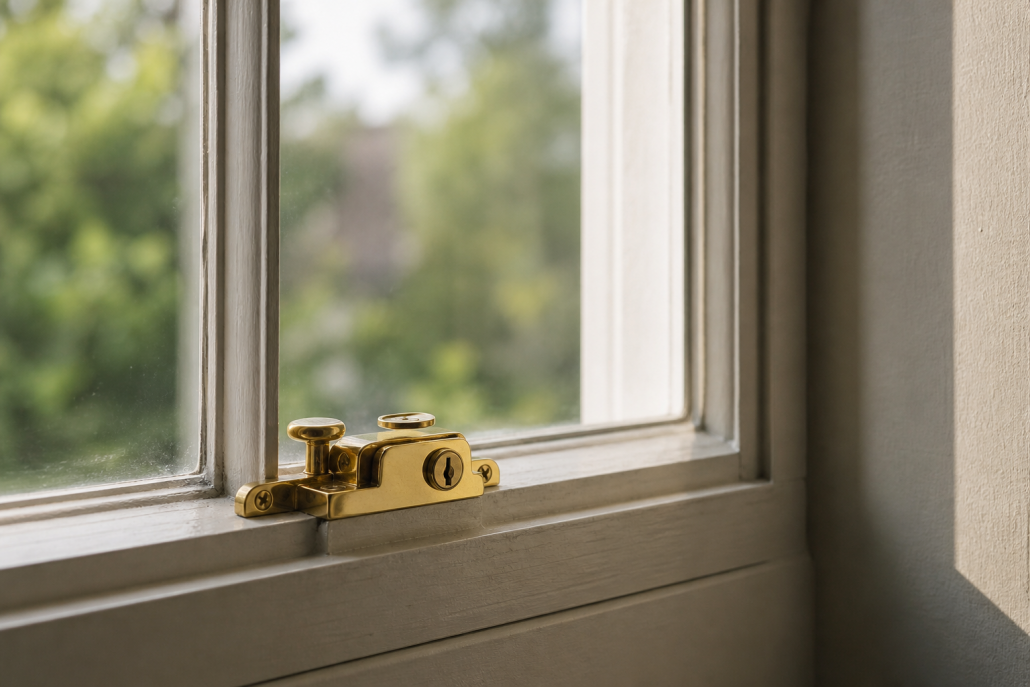
How Secure Are Timber Windows? A Modern Security Guide
In this article, you’ll discover:
- Why modern timber windows can be more secure than uPVC
- Multi-point locking systems and how they work
- PAS 24 security standards and what they mean
- Insurance requirements for window security
- The hardware that makes timber windows genuinely secure
Introduction
“But aren’t timber windows easier to break into?” It’s a question rooted in outdated assumptions. People picture Victorian sash windows with single latches, easily forced with a screwdriver. Modern timber windows bear no resemblance to that image.
Today’s timber windows incorporate the same advanced locking systems as any material — multi-point locks, shootbolts, laminated glass, key-locking handles. The timber frame itself is arguably harder to compromise than uPVC, which can flex and distort under pressure.
We manufacture timber windows to the highest security specifications, including PAS 24 certification where required. This guide explains what modern timber window security actually involves and how to ensure your windows meet both practical security needs and insurance requirements.
Multi-Point Locking Systems
The days of single-point locks are long gone. Modern timber windows use sophisticated multi-point systems.
How Multi-Point Locks Work
When you turn the handle, multiple locking points engage simultaneously around the frame perimeter. A typical system includes:
- Hooks or bolts at multiple positions (typically 3-7 points)
- Shootbolts extending into the frame head and sill
- Central latch engaging the keep in the frame
- Compression seals pulled tight by the locking action
The result: force applied at any single point must overcome resistance distributed across the entire frame. Breaking in means defeating multiple locks simultaneously — dramatically harder than forcing one.
Lock Point Configurations
| Configuration | Security Level | Typical Application |
| 3-point | Good | Upper floor windows, low-risk areas |
| 5-point | Very good | Ground floor, standard residential |
| 7-point | Excellent | High-risk locations, enhanced security |
For most ground floor applications, 5-point locking provides excellent security. 7-point systems suit properties in higher-risk areas or where maximum security is required.
PAS 24: The Security Standard Explained
PAS 24 is the British security standard for windows and doors. Understanding it helps you specify appropriately.
What PAS 24 Means
PAS 24 (now formally BS EN PAS 24) is a publicly available specification for enhanced security performance. Windows certified to PAS 24 have passed rigorous testing including:
- Manual attack tests — attempts to force entry using common burglary tools
- Cylinder security tests — resistance to lock snapping, picking, drilling
- Hardware durability tests — locking mechanisms tested for reliability
A PAS 24 certified window isn’t just fitted with good locks — the entire window (frame, glazing, hardware) has been tested as a complete system.
When PAS 24 Is Required
Building Regulations Approved Document Q requires “secure windows” for new builds and certain conversions. PAS 24 certification is the simplest way to demonstrate compliance.
For replacement windows in existing homes, PAS 24 isn’t legally required — but insurers increasingly expect it for ground floor and accessible windows.
PAS 24 and Timber Windows
Timber windows achieve PAS 24 certification readily. The inherent strength of timber frames — particularly hardwood — provides excellent resistance to forced entry. Combined with appropriate hardware, timber meets and exceeds the standard.
Glazing Security Options
The glass matters as much as the locks.
Laminated Glass
Laminated glass consists of two or more glass panes bonded with a plastic interlayer (typically PVB). When broken, fragments adhere to the interlayer rather than shattering.
Security benefits:
- Penetration resistance — breaking through requires sustained effort
- Noise deterrent — repeated impacts attract attention
- Fragment retention — no clean entry through broken glass
For ground floor windows, laminated glass significantly improves security. It’s also required for PAS 24 certification in most configurations.
Toughened vs Laminated
Toughened glass is stronger than standard glass but shatters completely when broken — creating easy access once compromised. For security, laminated outperforms toughened. For safety (preventing injury from broken glass), both work.
The ideal security specification: laminated glass on the outer pane, toughened on the inner.
Hardware and Ironmongery
Quality hardware transforms timber window security.
Key-Locking Handles
Handles that lock with a removable key prevent operation even if an intruder breaks glass and reaches inside. Essential for:
- Ground floor windows
- Windows accessible from flat roofs or balconies
- Any window within reach of a door or other opening
Key-locking handles are standard on most modern timber windows. Ensure keys are removed when the property is unoccupied.
Shootbolts
Shootbolts extend from the opening sash into the frame head and sill, providing locking points where multi-point systems don’t reach. They’re particularly valuable on:
- Sash windows — locking the meeting rail
- Casements — extending into head and sill
- Large windows — additional security for wider spans
Hinge Security
Modern friction stays and hinges include security features:
- Restricted opening — prevents removal when window is ajar
- Anti-lift devices — stops sash being lifted from hinges
- Concealed fixings — no external access to hinge screws
Timber vs uPVC Security
How does timber actually compare?
Frame Strength
Timber frames are inherently rigid. uPVC frames can flex under sustained pressure, potentially allowing enough distortion to disengage locks. This isn’t theoretical — police reports note uPVC frame manipulation as a known entry method.
Hardwood timber frames — particularly oak and accoya — offer superior rigidity. Even engineered softwood outperforms uPVC for resistance to distortion.
Hardware Compatibility
Timber accepts all hardware types securely. Screws bite firmly into solid timber; fixings hold under stress. uPVC requires steel reinforcement for secure hardware mounting — when that reinforcement is inadequate or absent, locks can pull away under force.
The Verdict
With equivalent hardware, timber windows are at least as secure as uPVC — and arguably more so due to superior frame rigidity and hardware retention. The “timber is less secure” perception reflects historic windows, not modern manufacturing.
Insurance Requirements
Your insurer may specify minimum security standards.
Typical Requirements
Most household insurers require:
- BS 7950 (or equivalent) locks — most multi-point systems qualify
- Key-operated locks on accessible windows — ground floor, near flat roofs
- Locks engaged when property unoccupied — obvious but often specified
Some insurers now require or incentivise PAS 24 windows for new installations or claims following break-ins.
Checking Your Policy
Before specifying windows, check your insurance policy’s security requirements. Look for:
- Named standards (BS 7950, PAS 24)
- Specific hardware requirements
- Accessible window definitions
- Any new-for-old replacement conditions
We can advise on hardware specifications to meet common insurance requirements.
Frequently Asked Questions
Are timber windows secure enough for ground floor use?
Absolutely. Modern timber windows with multi-point locking, key-operated handles, and laminated glass meet or exceed security standards for ground floor installation. PAS 24 certified timber windows pass the same rigorous testing as any material. The timber frame’s rigidity actually provides advantages over uPVC in resisting forced entry.
What is PAS 24 certification?
PAS 24 is the British standard for enhanced security windows and doors. Certified products have passed manual attack testing, lock manipulation tests, and durability assessments. It’s required for new builds under Building Regulations Approved Document Q and increasingly expected by insurers. Timber windows achieve PAS 24 certification readily.
Do I need laminated glass for security?
For ground floor and accessible windows, laminated glass significantly improves security by resisting penetration even when cracked. It’s required for PAS 24 certification in most configurations. Upper floor windows can use standard double glazing unless specific security concerns exist.
Will my insurance cover timber windows?
Yes — insurers don’t discriminate by frame material. They care about locking systems and glazing specifications. Ensure your timber windows meet any security standards specified in your policy (typically BS 7950 locks minimum). PAS 24 certification satisfies most insurance requirements automatically.
How do timber window locks compare to uPVC?
Modern timber and uPVC windows use identical locking mechanisms — the same multi-point systems, shootbolts, and handles. The difference is how securely the frame holds that hardware. Timber’s rigidity and screw-holding capacity often exceeds uPVC, particularly with hardwood frames.
Conclusion
Modern timber windows are highly secure — matching or exceeding uPVC and aluminium alternatives. Multi-point locking systems, laminated glass, key-operated handles, and PAS 24 certification provide comprehensive protection against forced entry.
The timber frame itself contributes to security: its rigidity resists distortion, and solid wood holds hardware fixings firmly under stress. The outdated perception of vulnerable timber windows reflects historic designs, not contemporary manufacturing.
At Timber Windows Direct, we manufacture timber windows with security hardware to your specification — from standard 5-point locking to full PAS 24 certification. Request your free quote and let’s discuss the security specification that suits your property.


Leave a Reply
Want to join the discussion?Feel free to contribute!