
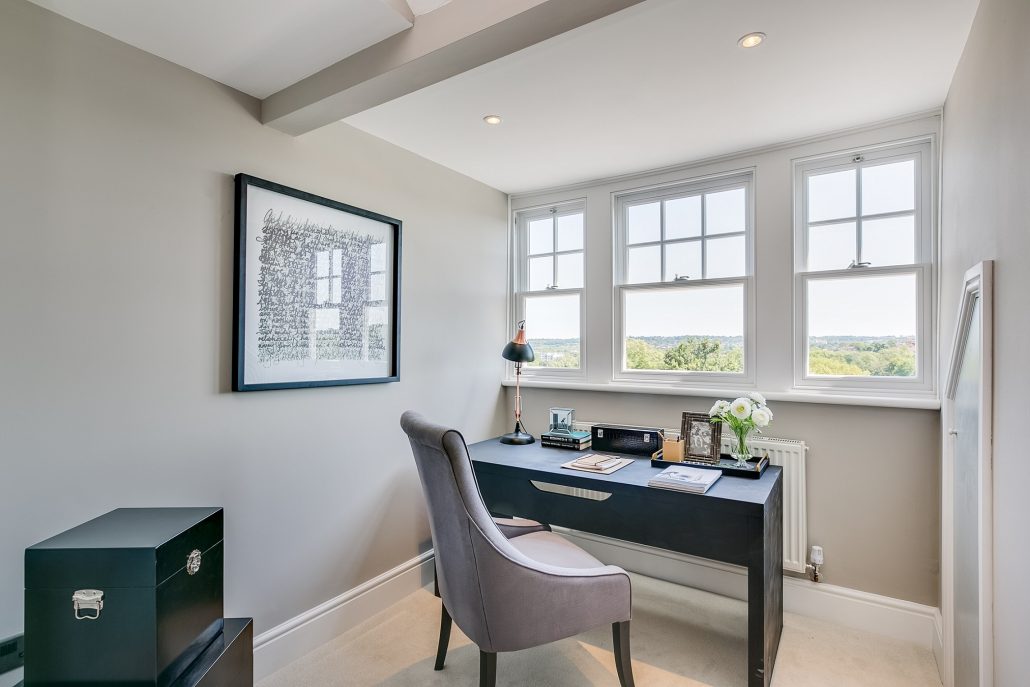
How Timber Windows Add Long-Term Value to Your Property
In this article, you’ll discover:
- How windows impact first impressions and kerb appeal
- Why buyers pay more for period-appropriate materials
- The EPC effect: how window efficiency affects property value
- What estate agents say about timber vs uPVC
- Where timber investment makes the biggest difference
“Will I get my money back if I sell?” It’s one of the first questions homeowners ask when considering timber windows over uPVC.
The short answer: in most cases, yes — and often more. But the real picture is more nuanced than a simple ROI calculation. Timber windows affect property value in several ways, and understanding these helps you make the right decision.
Kerb Appeal: The 10-Second Window
Estate agents will tell you: buyers make up their minds within seconds of seeing a property. And what do they see? The front elevation. The windows.
Windows typically cover 15-25% of a building’s façade. They’re impossible to miss. And while buyers might not consciously think “those are timber windows,” they absolutely register the overall impression — proportions, detailing, quality.
What Buyers Notice
- Proportion and design: Timber allows for slim glazing bars and authentic period profiles that uPVC can’t replicate
- Colour and finish: Timber can be painted any colour; uPVC is limited and fades over time
- Condition: Well-maintained timber looks premium; ageing uPVC looks cheap
- Consistency: Windows that match the property’s character vs obvious replacements that jar
On period properties especially, uPVC windows can actively detract from value. They signal “budget upgrade” to experienced buyers.
Period Properties: Authenticity Commands a Premium
For Victorian, Edwardian, Georgian, and Arts & Crafts properties, original or sympathetic replacement windows are expected by buyers at the upper end of the market.
What the Data Shows
Properties in conservation areas typically sell for 5-15% more than equivalent properties outside. Part of that premium reflects the architectural integrity that comes with appropriate materials.
Conversely, period properties with uPVC windows often sell below comparable homes. Estate agents report that buyers factor in the cost of “putting right” the windows — and then some, because it’s a hassle they’d rather avoid.
The Premium Market Effect
In higher-value areas, buyer expectations increase dramatically. A Victorian townhouse in a desirable London neighbourhood? Buyers expect timber sash windows. Anything else is a negative.
We’ve had customers tell us their estate agent specifically recommended upgrading from uPVC to timber before marketing — the agent knew it would make a material difference to offers.
Energy Efficiency and EPC Ratings
With proposed legislation potentially requiring minimum EPC ratings for sales and lettings, energy efficiency has become a valuation factor.
Modern timber windows with quality double glazing achieve U-values around 1.2-1.4 W/m²K — better than most uPVC at equivalent price points. Combined with low-e glass and argon filling, timber windows can significantly improve a property’s EPC rating.
Research suggests each EPC band improvement adds roughly 3-5% to property value. For a £400,000 home, moving from D to C could mean £12-20,000.
Longevity: The Investment That Keeps Giving
Here’s something buyers increasingly understand: timber windows last 60+ years. uPVC? 20-30 years.
For an informed buyer, uPVC windows installed 15 years ago represent a liability — replacement within the next decade. Timber windows of equivalent age have decades of life remaining.
This matters for valuations. Estate agents increasingly note window type and condition. “Original timber sash windows, well maintained” is a positive. “uPVC replacement windows, 2008” is neutral at best.
What Estate Agents Actually Say
We asked several estate agents operating in areas with mixed housing stock. Here’s the consensus:
On period properties: “Timber windows are expected. uPVC is a negative that gets flagged in particulars — often unspoken but definitely factored into offers.”
On conservation areas: “Buyers actively look for properties with correct windows. They know getting planning for changes is difficult, so finding a property that’s already right commands a premium.”
On modern properties: “Less differentiation here. Quality matters more than material. But even on newer builds, timber signals ‘premium’ in a way uPVC doesn’t.”
On ROI: “You won’t necessarily get every pound back on a modern property. But on period homes, especially in good areas, timber windows can return 100%+ of investment through increased sale price.”
Where Timber Investment Makes the Biggest Difference
Strongest return:
- Listed buildings (often required)
- Properties in conservation areas
- Victorian, Edwardian, Georgian homes in desirable areas
- Premium developments where quality is expected
Good return:
- Character properties generally
- Properties in affluent areas
- Homes you plan to keep long-term (value compounds)
Neutral to modest return:
- Standard modern housing
- Properties you’ll sell within 5 years
- Areas where buyers prioritise price over quality
Frequently Asked Questions
Windows as Investment
Timber windows aren’t just a purchase — they’re an investment in your property. The returns come through kerb appeal, period authenticity, energy efficiency, and sheer longevity.
Whether you’re planning to sell soon or stay for decades, timber windows make financial sense for most period and character properties. And even where the immediate ROI is modest, you get daily benefits — aesthetics, comfort, performance — that spreadsheets don’t capture.
At Timber Windows Direct, we manufacture bespoke windows in engineered pine, meranti, and oak. Get in touch to discuss how we can add value to your property.


Leave a Reply
Want to join the discussion?Feel free to contribute!