
Supply Only Timber Windows: Is DIY Installation Worth It?
In this article, you’ll discover:
- What “supply only” actually means and who it suits
- The carpentry skills DIY window fitting really demands
- The tools you’ll need and what they cost (£300-500)
- Realistic savings versus the risks of getting it wrong
- How Building Regulations and warranties complicate DIY
- An honest verdict on when DIY makes sense — and when it doesn’t
Introduction
Supply only is tempting. You buy the windows, fit them yourself, and pocket the money you’d have paid an installer, often 30-40% of the total project cost. For a competent DIYer, that’s a serious saving.
But window installation isn’t shelf assembly. Get it right and you save a meaningful sum. Get it wrong and you face draughts, leaks, jammed sashes, voided warranties, and potentially a Building Regulations headache when you sell.
We supply timber windows nationwide on a supply-only basis, so we’ve seen both outcomes: the confident carpenter who fits a flawless run of casements, and the optimistic beginner who calls us three days in. This guide gives you an honest basis to decide which you’re likely to be.
What “Supply Only” Means
Supply only is exactly what it sounds like: we manufacture your bespoke windows to precise measurements and deliver them, but installation is down to you (or a fitter you arrange separately).
It’s the opposite of a “supply and fit” service, where the same company measures, makes, and installs. Supply only puts you in control of the fitting — and responsible for it.
Who It Suits
Supply only makes most sense for experienced tradespeople, seasoned DIYers with solid carpentry skills, builders managing their own projects, and landlords or developers with in-house teams. If you fall into one of those groups, the savings are real and the process is manageable.
It’s a poor fit for anyone whose DIY experience stops at flat-pack furniture and shelving. Window fitting is structural, weather-critical work, a different order of difficulty.
The Skills You Actually Need
The skill level involved is worth being clear about. Window installation sits at intermediate carpentry and above: not expert work, but well beyond beginner.
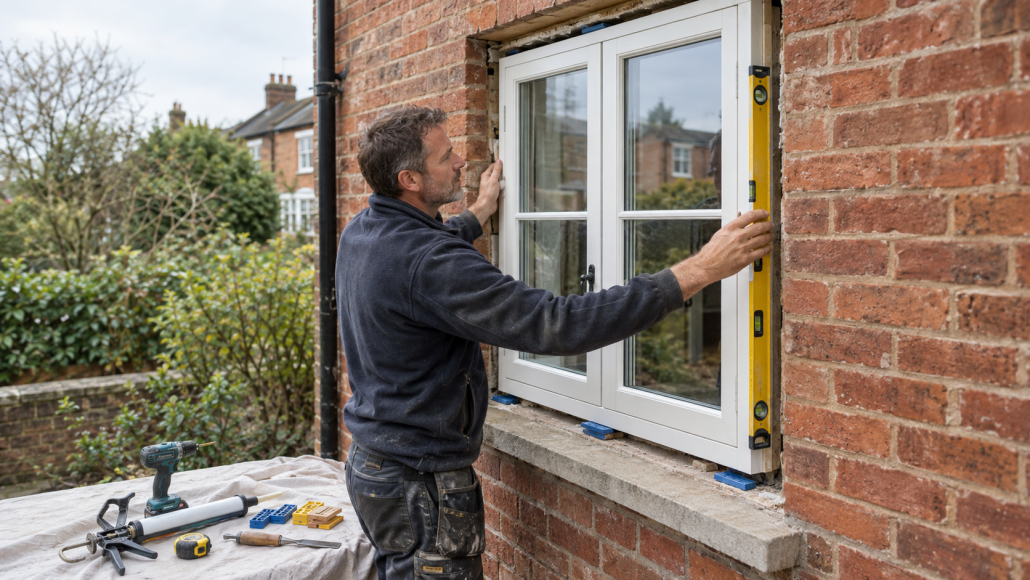
You need to be comfortable with accurate measuring (to the millimetre), working with levels and packers to get a frame plumb and square, cutting and fitting timber sub-frames or sills where needed, applying sealants and weatherproofing correctly, and handling heavy, awkward units safely — often at height.
You also need to understand why each step matters. A frame that’s a couple of millimetres out of square will bind the sashes. A poorly sealed perimeter will let water in. These aren’t cosmetic issues — they compromise the window’s function and lifespan.
The Honest Test
Ask yourself: have you hung a door so it closes cleanly on the latch every time? Fitted a kitchen with level, aligned units? If yes, you likely have the baseline skills. If those jobs would daunt you, window fitting will too.
Tools Required
Fitting windows properly needs a decent kit. If you don’t already own most of it, budget £300-500 for the outlay.
The essentials include a good spirit level (ideally two, a long and a short), a drill/driver and appropriate fixings, packers and shims, a mitre or hand saw for any timber trimming, a caulking gun and quality sealants, a mallet, chisels, and a tape measure you trust. For upper floors you’ll also need safe access — scaffold tower or secure ladders.
Factor this into your savings calculation. If you’re buying tools for a single project, the £300-500 eats into the money you’re saving by not paying a fitter.
The Savings in Practice
The appeal is straightforward once you put numbers to it. Professional installation typically accounts for 30-40% of a window project’s total cost, which on a whole-house replacement can run to thousands.
Fitting them yourself captures that saving directly. On a project where installation would cost £3,000, a competent DIY job keeps most of that in your pocket — minus the tool outlay and your own time.
But be realistic about time. A professional fits windows daily and works fast. A capable DIYer should expect to take two to three times longer per window. What a fitter does in a day might take you a long weekend. That’s fine if you enjoy the work and value the saving — but factor your time in honestly.
The Risks and Pitfalls
This is where supply-only DIY needs a clear-eyed view. The savings are real, but so are the ways it can go wrong.
Warranty Complications
This is the big one. Many manufacturers’ guarantees depend on correct installation. Fit the windows incorrectly and you can void the product warranty — leaving you unprotected if a problem develops. Always check the warranty terms before you commit to self-installation. Our guidance on timber window maintenance assumes correct fitting as the starting point.
Building Regulations Compliance
Replacement windows must comply with Building Regulations: principally thermal performance (U-value of 1.4 W/m²K maximum), plus ventilation and, where relevant, fire escape and safety glazing requirements.
Professional installers registered with a competent person scheme like FENSA can self-certify compliance. As a DIY installer, you can’t — which means you must notify your local authority Building Control and pay for inspection. Skip this and you may face problems (and costs) when you come to sell, as the missing certification shows up in conveyancing searches.
Getting It Physically Wrong
The practical pitfalls are real: frames fitted out of square that bind or won’t close, inadequate sealing that lets water and draughts in, poor packing that distorts the frame over time, and damage to the units during handling. Any of these can turn a saving into an expensive re-do.
When DIY Makes Sense
Pulling it together, supply-only DIY is worth it when several things line up.
You have genuine intermediate-plus carpentry skills and have done comparable work. You either own the tools or the project is large enough to justify buying them. You’re prepared to handle Building Regulations notification properly. You’ve confirmed self-installation won’t void your warranty. And you have realistic expectations about the time involved.
Tick those boxes and the 30-40% saving is yours to claim. For a straightforward ground-floor casement replacement in particular, a competent DIYer can do an excellent job.
When to Pay for Fitting
Equally, some situations call for professional installation regardless of your skills.
Large or heavy units at height, structural openings that need altering, sash windows with their weights and cords (more complex than casements), listed buildings or conservation areas where compliance is critical, and any project where warranty protection or FENSA certification matters to you. In these cases, the installer’s fee buys certainty — and certainty is often worth more than the saving.
Frequently Asked Questions
What does supply only mean for timber windows?
Supply only means the manufacturer makes and delivers your bespoke windows, but you arrange installation yourself, either fitting them personally or hiring a separate fitter. It contrasts with “supply and fit”, where one company handles everything. Supply only puts you in control of the installation and responsible for its quality.
How much can I save fitting windows myself?
Installation typically accounts for 30-40% of a window project’s total cost, so DIY fitting can capture most of that. On a project where installation would cost £3,000, that’s a substantial saving — though you should subtract any tool outlay (£300-500) and value your own time, since DIY takes two to three times longer than a professional.
Does DIY installation void the warranty?
It can. Many manufacturers’ guarantees depend on correct installation, and self-fitting may void product warranty cover. This is one of the most important things to check before committing to DIY. Always confirm the specific warranty terms with your supplier first — the protection you lose may outweigh the money you save.
Do I need to tell Building Control if I fit my own windows?
Yes. Replacement windows must comply with Building Regulations. Professional installers registered with a competent person scheme (like FENSA) can self-certify, but DIY installers cannot — so you must notify your local authority Building Control and arrange inspection. Skipping this can cause problems and costs when you sell the property.
Is fitting sash windows harder than casements?
Generally yes. Sash windows involve weights or spring balances, cords, and finely balanced moving parts, making them more complex to install correctly than side-hung casements. For a first DIY window project, straightforward ground-floor casements are far more forgiving than sashes. Consider professional fitting for sashes unless you’re confident.
How long does DIY window installation take?
Expect two to three times longer than a professional. A fitter working daily might install several windows in a day; a capable DIYer should plan for roughly half a day to a day per window, more for sashes or awkward openings. Rushing is where mistakes happen, so allow generous time rather than working to a tight deadline.
Conclusion
Supply-only DIY can save you 30-40% of your project cost, a real reward for real skill. But it’s intermediate-plus carpentry, not a beginner’s job, and the risks are real: voided warranties, Building Regulations pitfalls, and the practical hazards of getting a structural, weather-critical fit wrong.
So where does that leave you? If you’ve hung doors and fitted kitchens to a high standard, own the tools, and will handle the compliance properly, go for it, especially on ground-floor casements. If any of that gives you pause, the installer’s fee buys peace of mind that’s usually worth paying.
Whichever route suits you, we supply bespoke timber windows nationwide, cut to your exact measurements. Get in touch and we’ll help you order with confidence — and advise honestly on whether fitting them yourself is the right call.


Leave a Reply
Want to join the discussion?Feel free to contribute!