
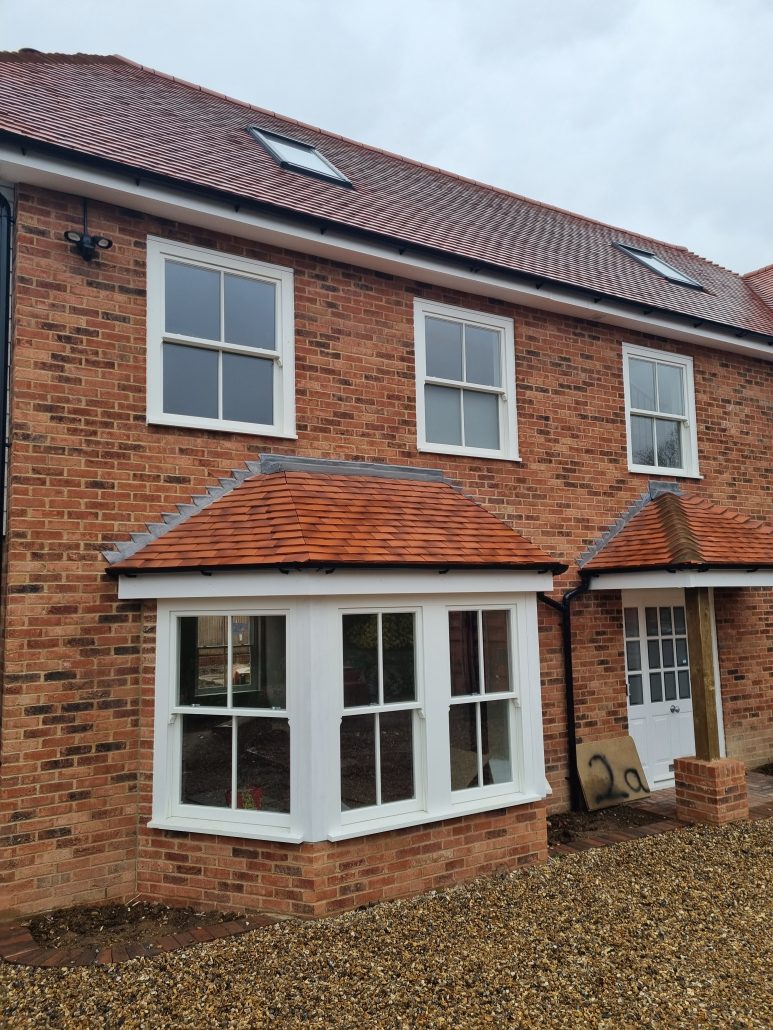
Wooden Frame Windows: The Complete UK Construction Guide
In this article, you’ll discover:
- How window frames are jointed, and where finger joints belong
- Hardwood, softwood and engineered timber compared
- Why frame depth limits your glazing options
- How frame quality shows up in draughts, security and day-to-day use
- What timber durability classes mean, and what they don’t
- Finishing systems and realistic repainting intervals
Introduction
When people compare quotes for new windows, most of the attention goes on the glass: double or triple, argon or krypton, the U-value on the specification sheet. The frame gets far less scrutiny, even though it decides how long the window lasts, whether the sashes keep closing cleanly and whether the seals still work ten years on.
Two timber windows can look identical in a showroom and behave very differently after a few winters. The difference sits in things you can’t see from the front: how the corners are jointed, which timber was used and how it was prepared, how deep the sections are and how the finish was applied.
We make bespoke windows in engineered pine, meranti and oak. This guide explains each of those factors in plain terms, so you can read a specification and know what you’re paying for.
Frame Construction Methods: Mortise & Tenon vs Finger Joints
Two different kinds of joint often get mixed up in window brochures. One holds the corners of a frame or sash together; the other is used to build up the timber itself.
Mortise and Tenon Joints
A tenon cut on the end of one member fits into a slot (the mortise) cut in the other. The joint is glued and, in traditional work, wedged or pinned. Because the parts interlock mechanically, the joint keeps its strength even if the glue weakens over decades.
This is the benchmark for corners on sashes and casements, which carry the weight of the glass and are opened and closed thousands of times. Historic windows in listed buildings are almost always made this way, and like-for-like replacements are expected to follow suit. Historic England’s guidance on traditional windows explains why repair and matching joinery matter on historic buildings.
Finger Joints
A finger joint is not a corner joint. It joins short lengths of timber end to end to make long pieces, and it’s mainly found inside laminated (engineered) timber. The manufacturer cuts out knots and defects, then finger-joints the clear lengths back together, which produces straighter and more consistent sections than a single piece of timber of the same size.
A properly made finger joint is very strong. The risk lies in poor bonding or a joint placed in a vulnerable spot, where it can open slightly and show as a fine crack through the paint. Good manufacturers control both.
Comb or Bridle Joints
Some machine-made frames use open comb (bridle) joints at the corners: interlocking slots glued together. They’re quick to machine and can perform well, but they rely more on the adhesive and leave more end grain exposed at the corner, so sealing and finishing need to be thorough.
Timber Species: Hardwood vs Softwood vs Engineered
Species affects durability, stability, appearance and price. Our hardwood species comparison goes into more depth; this section covers what matters for the frame.
Engineered Softwood (Pine)
Engineered softwood is laminated from three or more layers of pine, with defects removed and the layers bonded so that their growth rings work against each other’s movement. The result is a straighter, more stable section than solid softwood of the same size. It takes paint very well and is the most affordable of the three. With a good factory finish and regular maintenance, expect 30-40 years.
Solid, non-laminated softwood is cheaper again, but it moves more and carries more knots. That’s where budget windows usually save money.
Meranti
Meranti is a tropical hardwood with a fine, even grain that machines cleanly and takes paint or stain well. It’s more naturally durable than pine, with a typical life of 40-50 years. “Meranti” covers several species of varying density, so the grade matters: dark red meranti is the one usually specified for joinery. Ask for FSC or PEFC certified timber.
Oak
European oak has very durable heartwood and a distinctive grain that suits a natural or oiled finish. Expect 60 years or more. It moves more than engineered timber, and its tannins react with iron and plain steel, causing black stains, so fixings and hardware should be stainless or suitably coated. It’s the most expensive option.
Comparison Table: Timber Species for Window Frames
| Factor | Engineered Softwood | Meranti | Oak |
| Typical lifespan (maintained) | 30-40 years | 40-50 years | 60+ years |
| Relative cost | Lowest | Middle | Highest |
| Stability | Excellent | Very good | Good |
| Best finish | Paint | Paint or stain | Oil, stain or paint |
| Typical use | Most homes, painted windows | Conservation areas, stained finishes | Period and heritage properties |
For a wider look at the trade-offs, see engineered timber vs solid timber.
Frame Depth: Why Millimetres Matter
Frame depth is the thickness of the frame and sash sections from inside face to outside face. It’s one of the most overlooked figures when people compare quotes.
What Frame Depth Affects
Glazing options. A double-glazed unit is typically 24-28mm thick and a triple-glazed unit 36-44mm. The sash has to be deep enough to hold the unit with enough timber either side of it. Our comparison of triple and double glazing covers the trade-offs in detail.
Strength and fixings. Deeper sections leave more timber around lock keeps, hinges and multi-point locking hardware.
Heat flow. Timber is a poor conductor of heat, and a deeper section gives heat a longer path through the frame, which helps the whole-window U-value.
Standard Frame Depths
Most quality timber casements use sections of 56-68mm. Thinner budget sections, around 44mm, limit glazing choices and leave less room for hardware. For triple glazing, look for 68mm or deeper and confirm the profile was designed for the unit thickness you want.
You can’t judge depth from a photograph. Check the specification, or measure the sash thickness on a sample.
How Frame Quality Affects Window Performance
Some differences between good and poor frames only show up after a few seasons.
Airtightness and Draught Proofing
Seals only work if the frame stays true. A frame that twists or shrinks opens gaps that no weatherstrip can close, which is why stable timber matters. On flush casement windows, where the sash closes level with the frame, any movement is visible as well as draughty.
Security
Lock keeps and hinges are only as strong as the timber they’re screwed into. Dense hardwood and laminated softwood hold screws firmly; soft, knotty timber can strip around fixings. For ground floor windows, frames should be designed for multi-point espagnolette locking — our timber window security guide explains what to look for.
Water Management
Rot almost always starts low down, at the bottom rail and the sill. A well-made frame sheds water with sloped sills, drip grooves and weatherbars, and keeps end grain sealed. These details are easy to check on a sample and say a lot about the manufacturer.
Wooden Frame Durability by Timber Type
Durability Classes
European standard EN 350 rates the natural resistance of heartwood to wood-destroying fungi on a scale from Class 1 (very durable) to Class 5 (not durable). TRADA’s definitions of the classes also note that the sapwood of most species isn’t durable and needs preservative treatment in exposed positions.
Typical ratings for window timbers:
- Class 1 (very durable): teak; acetylated timber such as Accoya has been assessed as Class 1
- Class 1-2: iroko
- Class 2 (durable): European oak
- Class 2-4 (variable): dark red meranti
- Class 3-4: Scots pine (European redwood)
- Class 4 (slightly durable): spruce (European whitewood)
A durability class describes natural rot resistance, not how long a window will last. Window lifespan depends far more on design, preservative treatment, finish and maintenance, which is why well-made softwood windows can outlast badly made hardwood ones.
Real-World Longevity
We regularly see Victorian softwood sashes still working after more than a century. They were made from slow-grown timber and repainted for most of their lives. We also see hardwood frames under 20 years old rotting at the bottom rail because the finish was never maintained. Species sets the ceiling; maintenance decides whether you reach it. Our guide on how long timber windows last covers the other factors.
Frame Finishing Options
The finish is the frame’s main defence against water and sunlight.
Factory-Applied Finishes
Quality windows arrive with a factory-applied paint or stain system: preservative treatment, a primer and several microporous top coats, applied in controlled conditions before glazing. Microporous coatings let water vapour escape from the timber while keeping liquid water out, which stops paint blistering and moisture building up behind the film.
Paint, Stain or Oil
Opaque paint gives the longest interval between redecoration. Translucent stain shows the grain but needs recoating more often. Oiled oak looks beautiful and needs the most frequent attention.
Colour and Sunlight
Dark colours absorb more heat, which puts more stress on the finish and the timber on south and west elevations. Many finish manufacturers recommend lighter colours or specific dark-colour formulations for exposed elevations, so ask what your supplier’s system allows.
Maintenance Intervals
With a quality factory finish, painted frames typically need full redecoration every 8-12 years, and translucent stains every 3-5 years. Inspect once a year, paying most attention to bottom rails and sills, and touch up any cracks before water gets in.
Frequently Asked Questions
What’s the difference between wooden window frames and timber window frames?
There’s no practical difference. The terms are interchangeable in the UK: “timber” is the usual trade term, while homeowners more often say “wooden”. Both cover frames made from hardwoods such as oak and meranti and softwoods such as pine. When comparing quotes, look at the species, whether the timber is engineered, the section depth and the finish system, rather than the word the supplier uses. Some suppliers also use “timber frame” for timber-framed houses, which is a separate subject from window frames.
How long do wooden frame windows last?
With proper maintenance, engineered softwood frames typically last 30-40 years, meranti 40-50 years and oak 60 years or more. Construction and upkeep matter as much as species, and exposure plays a part too: frames on coastal or west-facing elevations tend to sit towards the lower end of these ranges. Keeping the finish intact, especially on bottom rails and sills, is the single biggest factor.
Are wooden window frames more expensive than uPVC?
Yes. Timber windows usually cost around 40-100% more than uPVC upfront, depending on species, size and specification. The comparison changes over the life of the window: timber lasts longer, can be repaired and repainted rather than replaced, and is often preferred by buyers of period homes. In conservation areas, timber may be the only material the council will approve. Because uPVC is usually replaced rather than repaired at the end of its life, typically after 25-35 years, the gap in lifetime cost is narrower than the upfront prices suggest.
Do wooden frame windows meet Building Regulations?
Yes. Replacement windows in England must achieve a whole-window U-value of 1.4 W/m²K or better under Part L, and quality double-glazed timber windows typically reach 1.2-1.4 W/m²K, with triple glazing achieving around 0.8 W/m²K or better. Part F ventilation can be met with trickle vents, and installation by a FENSA-registered installer provides the compliance certificate.
What timber is best for window frames in the UK?
It depends on the property and the finish you want. Oak suits period and heritage homes and natural finishes, and lasts longest. Meranti is a good middle ground, particularly for stained finishes and conservation areas. Engineered softwood offers the best stability for the price and is the sensible choice for most painted windows. All three perform well in the UK climate if properly finished and maintained.
Are finger-jointed window frames a sign of poor quality?
No. Finger joints are standard in engineered timber, where they let manufacturers remove knots and defects and build straighter, more stable sections. Quality depends on how well the joints are bonded and where they sit in the section. What to avoid is cheap solid timber with weak corner joints. Ask which joints are used at the corners: mortise and tenon is the benchmark for sashes. A good supplier will also tell you whether end grain is sealed before finishing, which matters as much as the joint itself.
Can wooden frame windows be double or triple glazed?
Yes. Most quality timber windows are double glazed as standard, and triple glazing is available where the sections are deep enough. Triple units are around 36-44mm thick, so look for frame and sash sections of 68mm or more, designed for that unit. With low-E glass and argon fill, triple-glazed timber windows can achieve whole-window U-values below 1.0 W/m²K. Bear in mind that triple units are heavier, which puts more load on hinges and, on sash windows, on the weights or springs.
Conclusion
A wooden window is only as good as its frame. Corner joints, the timber and how it was prepared, section depth and the finishing system decide how the window performs long after the glass has been forgotten.
When you compare quotes, ask about each of those four things, and treat vague answers as a warning sign. If you’d like a specification you can check line by line, send us your sizes and the timber you’re considering and we’ll quote for bespoke frames in engineered pine, meranti or oak.


Leave a Reply
Want to join the discussion?Feel free to contribute!