In this article, you’ll discover: Introduction Here’s a question we hear constantly: “Are timber windows worth the extra money?” The short answer is yes — but the full picture is more nuanced than most websites will tell you. Timber windows have been the backbone of British architecture for centuries. From Georgian townhouses to Victorian terraces, […]
https://timberwindows-direct.co.uk/wp-content/uploads/2026/01/20220304_082039-scaled.jpg19202560Michal Plonskihttps://timberwindows-direct.co.uk/wp-content/uploads/2017/06/TWD-logo-small.pngMichal Plonski2026-02-04 10:31:062026-02-15 11:18:21Timber Windows: Everything UK Homeowners Need to Know
In this article, you’ll discover: Introduction Here’s something that might surprise you: the frame accounts for roughly 70% of a window’s overall performance. Yet most homeowners spend hours researching glazing options and barely glance at what’s holding that glass in place. We’ve seen it countless times. A customer invests in triple glazing, only to wonder […]
https://timberwindows-direct.co.uk/wp-content/uploads/2018/01/St-Albans-2.jpg11342016Michal Plonskihttps://timberwindows-direct.co.uk/wp-content/uploads/2017/06/TWD-logo-small.pngMichal Plonski2026-01-29 09:52:002026-01-31 12:16:40Wooden Frame Windows: The Complete UK Construction Guide
In this article, you’ll discover: Introduction Here’s a question we hear constantly: “Are timber windows worth the extra money?” The short answer is yes — but the full picture is more nuanced than most websites will tell you. Timber windows have been the backbone of British architecture for centuries. From Georgian townhouses to Victorian terraces, […]
https://timberwindows-direct.co.uk/wp-content/uploads/2026/01/20220304_082039-scaled.jpg19202560Michal Plonskihttps://timberwindows-direct.co.uk/wp-content/uploads/2017/06/TWD-logo-small.pngMichal Plonski2026-02-04 10:31:062026-02-15 11:18:21Timber Windows: Everything UK Homeowners Need to Know
In this article, you’ll discover: Introduction Here’s something that might surprise you: the frame accounts for roughly 70% of a window’s overall performance. Yet most homeowners spend hours researching glazing options and barely glance at what’s holding that glass in place. We’ve seen it countless times. A customer invests in triple glazing, only to wonder […]
https://timberwindows-direct.co.uk/wp-content/uploads/2018/01/St-Albans-2.jpg11342016Michal Plonskihttps://timberwindows-direct.co.uk/wp-content/uploads/2017/06/TWD-logo-small.pngMichal Plonski2026-01-29 09:52:002026-01-31 12:16:40Wooden Frame Windows: The Complete UK Construction Guide
The key differences between sash, casement and bay timber windows
Why engineered timber outperforms solid wood in most applications
How timber compares to uPVC and aluminium on cost, performance and aesthetics
Realistic price ranges for different timber window types
Energy efficiency ratings and what U-values actually mean for your bills
Maintenance requirements — and why they’re less demanding than you think
Introduction
Here’s a question we hear constantly: “Are timber windows worth the extra money?” The short answer is yes — but the full picture is more nuanced than most websites will tell you.
Timber windows have been the backbone of British architecture for centuries. From Georgian townhouses to Victorian terraces, Edwardian villas to modern eco-builds, wood-framed windows remain the gold standard for homeowners who think beyond the next five years.
But the timber window market has changed dramatically. Engineered timber has largely replaced solid wood. Factory-applied microporous finishes mean maintenance cycles of 8-12 years, not annual repainting. And thermal performance now rivals — often exceeds — synthetic alternatives.
We’ve spent over a decade manufacturing bespoke timber windows for UK homes. This guide distils that experience into practical advice: what to look for, what to avoid, and how to make a decision you won’t regret in twenty years.
Types of Timber Windows: Sash, Casement and Beyond
Choosing the right window style affects everything from ventilation to kerb appeal. Here’s what actually matters.
Sash Windows
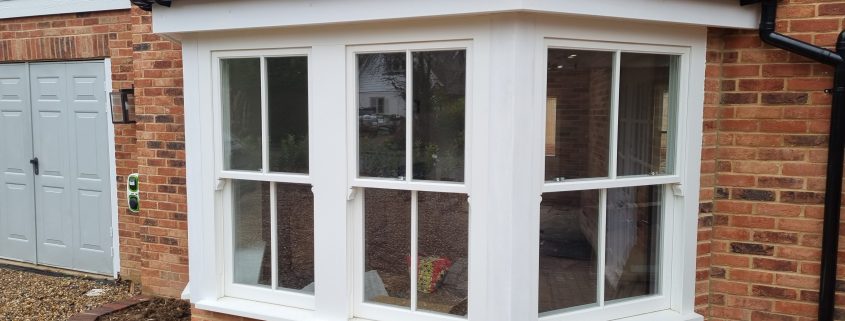
The classic British choice. Sash windows feature two movable panels (sashes) that slide vertically past each other. They’re defined by their elegance, excellent ventilation control, and suitability for period properties.
Traditional sash windows use a weight-and-pulley system concealed in the frame. Modern versions often use spiral balances instead — less historically accurate but perfectly functional for new builds. For listed buildings and conservation areas, the traditional mechanism is typically required.
Sash windows suit: Georgian, Victorian and Edwardian properties, conservation areas, anyone prioritising authentic period aesthetics.
Casement Windows
The most versatile option. Casement windows are hinged at the side (or top) and open outward. They offer maximum ventilation, easy cleaning access, and work with virtually any architectural style.
Flush casement windows sit flush with the frame when closed — a cleaner look that suits both traditional cottages and contemporary designs. Standard casements overlap the frame slightly, creating a more pronounced shadow line.
Casement windows suit: Modern homes, cottages, farmhouses, and properties where maximum airflow matters.
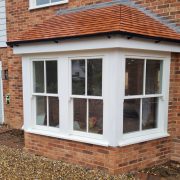
Bay and Bow Windows
Bay windows project outward from the building, creating additional interior space and dramatic architectural interest. The three main types are:
Type
Description
Typical Cost
Canted bay
Angled sides (usually 30° or 45°), most common
£3,000-£5,000
Box bay
90° angles, simple geometry
£2,500-£4,000
Bow window
Curved profile, premium option
£4,500-£7,000
Bay windows often require structural support and may need planning permission, particularly for new installations.
Tilt-and-Turn Windows
Popular in Europe, gaining ground in the UK. Tilt-and-turn windows tilt inward at the top for secure ventilation, or swing fully inward for cleaning and emergency egress. They’re excellent for upper floors where external access is difficult.
Timber Species: Softwood, Hardwood and Engineered Options
The wood you choose affects durability, appearance, maintenance requirements and cost. There’s no single “best” option — it depends on your priorities.
Engineered Softwood
Engineered softwood windows are now the industry standard, and for good reason. Multiple layers of timber are bonded together with grains running in alternating directions. The result is exceptional dimensional stability — meaning less warping, shrinking and swelling than solid timber.
Engineered pine (typically redwood) offers:
Superior stability compared to solid wood
Consistent quality with natural defects removed
Excellent paint adhesion
30-40 year lifespan with proper maintenance
The most cost-effective timber option
For most UK homeowners, engineered softwood represents the sweet spot between performance, longevity and value.
Hardwood Options
Hardwoods offer natural durability and distinctive grain patterns. The main species used for windows include:
Oak — The traditional British choice. Extremely durable (60+ year lifespan), develops a beautiful silver-grey patina if left untreated, or can be finished in any colour. Premium pricing: typically 50-70% more than softwood.
Meranti — A tropical hardwood offering excellent durability at a more accessible price point. Stable, machines well, and accepts finishes beautifully. Often called the “best value hardwood.”
Accoya — Modified softwood with hardwood-class durability. Sustainably produced, dimensionally stable. Premium pricing but exceptional longevity.
Comparison Table: Timber Species
Species
Durability
Maintenance Cycle
Relative Cost
Best For
Engineered Pine
30-40 years
8-10 years
££
Budget-conscious, most applications
Meranti
40-50 years
10-12 years
£££
Conservation areas, mid-range
Oak
60+ years
12-15 years
££££
Heritage properties, maximum longevity
Accoya
50+ years
10-12 years
££££
Exposed locations, sustainability priority
Timber vs uPVC vs Aluminium: An Honest Comparison
Let’s cut through the marketing and look at what actually matters.
Upfront Cost
Yes, timber windows cost more initially. Expect to pay:
uPVC: £300-£600 per window
Timber: £500-£1,200 per window
Aluminium: £600-£1,000 per window
That’s 40-100% more for timber compared to basic uPVC. But upfront cost tells only part of the story.
Lifespan and Total Cost of Ownership
Here’s where timber wins convincingly:
uPVC lifespan: 20-25 years (then full replacement)
Timber lifespan: 30-60+ years (with maintenance)
Aluminium lifespan: 30-45 years
A quality timber window can last two to three times longer than uPVC. Factor in replacement costs, and timber often works out cheaper over the building’s lifetime.
Thermal Performance
Modern timber windows achieve U-values of 1.4 W/m²K with double glazing, and 1.0-1.2 W/m²K with triple glazing. That comfortably exceeds Building Regulations Part L requirements (1.4 W/m²K for replacements).
Timber is a natural insulator. Frame U-values for timber typically outperform both uPVC and aluminium — the frame itself doesn’t conduct heat the way synthetic materials do.
Environmental Impact
Timber is the only window material that’s genuinely renewable. Trees absorb CO2 as they grow; that carbon remains locked in the wood for the window’s lifetime. At end of life, timber can be recycled, composted, or used for biomass energy.
uPVC production involves chlorine chemistry and plasticisers. Aluminium requires enormous energy to produce (though it’s recyclable). For environmentally-conscious homeowners, timber is the clear choice.
Aesthetics
This is subjective, but there’s a reason timber windows command premium prices in conservation areas and period properties. Wood has warmth, texture and character that synthetic materials simply can’t replicate. uPVC manufacturers have tried woodgrain foils for decades — the results still look like plastic.
Timber Window Costs: What to Expect in 2026
Pricing varies enormously based on size, style, timber species and glazing specification. These ranges reflect typical UK prices for supply-only bespoke windows:
Price Ranges by Window Type
Window Type
Softwood
Hardwood
Standard casement
£400-£700
£600-£1,000
Flush casement
£450-£800
£650-£1,100
Sliding sash
£700-£1,200
£1,000-£1,800
Bay window (3-panel)
£1,800-£3,500
£2,500-£5,000
Factors Affecting Price
Several elements push costs up or down:
Glazing: Triple glazing adds 15-25% vs double glazing
Size: Larger windows cost more (obviously), but not proportionally — a window twice the size isn’t twice the price
Finishing: Factory spray finishing is standard; specialist colours or stains may cost extra
Glazing bars: Georgian or Victorian patterns with authentic putty-line glazing bars add complexity
Installation Costs
As a supply-only manufacturer, we don’t install — but expect installation costs of £150-£350 per window depending on access, scaffolding requirements, and your location.
Energy Efficiency and Building Regulations
Understanding energy performance helps you make informed decisions and ensures compliance with Building Regulations.
What U-Values Mean
U-value measures how quickly heat passes through a material. Lower is better. Building Regulations Part L requires replacement windows to achieve U-values of 1.4 W/m²K or better.
Quality timber windows easily exceed this:
Double glazed timber: 1.4 W/m²K
Triple glazed timber: 0.8-1.2 W/m²K
Glazing Options
Double glazing with low-E glass and argon fill is the current standard. It offers excellent performance for most UK applications.
Triple glazing makes sense for:
North-facing elevations
Exposed locations
Passive house or ultra-low energy builds
Noise reduction priority areas
Ventilation Requirements
Building Regulations require background ventilation in habitable rooms. Trickle vents — small openings in the window frame — satisfy this requirement without compromising security. They’re now standard on most new timber windows.
Maintenance: The Truth About Looking After Timber Windows
The maintenance myth has cost timber windows countless sales. Let’s set the record straight.
Modern Reality vs Old Assumptions
Your grandmother may have painted her windows annually. Modern timber windows are different:
Factory-applied microporous finishes last 8-12 years
Engineered timber resists warping and movement
Quality weatherstripping maintains airtightness for decades
What Maintenance Actually Involves
Annually: Quick visual inspection. Check for paint chips or cracks, especially on south-facing windows. Clean frames with mild soapy water.
Every 8-12 years: Full redecoration. Sand lightly, apply fresh microporous paint system. A competent DIYer can do this; professional decorators charge £30-£50 per window.
As needed: Replace weatherstripping (easy, inexpensive), lubricate hardware, address any localised damage.
Compared to Alternatives
uPVC requires less routine maintenance — but when it fails (discolouration, warping, mechanism failure), replacement is the only option. Timber can be repaired, sanded, refinished and restored. A 100-year-old timber sash window can be made as good as new; a 25-year-old uPVC window goes to landfill.
Frequently Asked Questions
How long do timber windows last?
Lifespan depends heavily on timber species and maintenance. Engineered softwood windows typically last 30-40 years with proper care, meranti 40-50 years, and oak 60+ years. Well-maintained Victorian sash windows regularly exceed 120 years. The key factor isn’t the wood — it’s consistent maintenance. Never let bare timber remain exposed to weather, address paint breakdown promptly, and your windows will outlast you.
Are timber windows more expensive than uPVC?
Yes, typically 40-100% more upfront. However, timber windows last two to three times longer than uPVC, can be repaired rather than replaced, and add more value to properties. Estate agents report timber windows can increase valuations by 5-10%, particularly in conservation areas. Over a 60-year period, timber often proves cheaper than replacing uPVC windows twice.
Do timber windows meet Building Regulations?
Absolutely. Modern timber windows comfortably exceed Building Regulations Part L requirements. Quality double-glazed timber windows achieve U-values of 1.4 W/m²K (the requirement). Triple-glazed options reach 1.1 W/m²K or better. When professionally installed, timber windows qualify for FENSA certification just like any other material.
What’s the best timber species for windows?
It depends on your priorities. For maximum longevity and heritage properties, oak is the benchmark. For conservation areas where hardwood appearance matters but budget is realistic, meranti offers excellent value. For most modern homes prioritising cost-effectiveness, engineered softwood delivers superb performance. All species perform well in UK conditions when properly finished and maintained.
How often do timber windows need painting?
With modern factory-applied microporous finishes, expect 8-12 years between full redecorations. Lighter colours (white, cream) typically last longer than dark colours. South-facing windows weather faster than north-facing ones. Annual inspection catches any problems early — a touch-up to paint chips takes minutes and prevents bigger issues.
Can I get timber windows in a conservation area?
Timber windows are usually the preferred or required option in conservation areas. Planning authorities recognise that timber is the historically authentic material for most period properties. You’ll typically need planning approval for the design (glazing pattern, proportions, details), but the material itself is rarely an issue. In listed buildings, timber is almost always mandatory.
Are timber windows energy efficient?
Very. Timber is a natural insulator with inherently low thermal conductivity. Combined with modern double or triple glazing, low-E coatings and argon gas fill, timber windows achieve whole-window U-values that match or exceed synthetic alternatives. The frame itself contributes to thermal performance — unlike aluminium, which requires thermal breaks to prevent heat loss.
Conclusion
Timber windows represent a genuine long-term investment. Yes, they cost more upfront. Yes, they require periodic maintenance. But they also last two to three times longer than uPVC, perform better thermally, look incomparably better, and are the only renewable window option available.
For period properties, conservation areas, eco-conscious homeowners, and anyone thinking beyond the next decade, timber remains the intelligent choice. The key is specifying correctly: right timber species for your application, appropriate glazing for your climate, and quality manufacturing from a reputable supplier.
At Timber Windows Direct, we manufacture bespoke timber windows in engineered pine, meranti and oak — supply-only, delivered nationwide. Every window is made to order for your specific openings, with factory-applied finishing and comprehensive technical support.
Ready to explore your options? Request your free quote and let’s discuss what works best for your project.
https://timberwindows-direct.co.uk/wp-content/uploads/2026/01/20220304_082039-scaled.jpg19202560Michal Plonskihttps://timberwindows-direct.co.uk/wp-content/uploads/2017/06/TWD-logo-small.pngMichal Plonski2026-02-04 10:31:062026-02-15 11:18:21Timber Windows: Everything UK Homeowners Need to Know
Why frame construction method matters more than most homeowners realise
The real differences between hardwood, softwood and engineered timber frames
How frame depth affects thermal performance and glazing options
What separates a 15-year frame from one that lasts 60+ years
Frame finishing options and their impact on durability
Honest answers about costs, maintenance and Building Regulations
Introduction
Here’s something that might surprise you: the frame accounts for roughly 70% of a window’s overall performance. Yet most homeowners spend hours researching glazing options and barely glance at what’s holding that glass in place.
We’ve seen it countless times. A customer invests in triple glazing, only to wonder why their windows still feel draughty two winters later. The culprit? A poorly constructed frame that’s warped, shrunk, or simply wasn’t designed for British weather.
Wooden frame windows have been protecting UK homes for centuries — and there’s a reason they’re still the first choice for heritage properties, conservation areas, and homeowners who think long-term. But not all timber frames are created equal. The species, construction method, and depth all play crucial roles in how your windows perform.
In this guide, we’ll break down everything you need to know about wooden window frames. No jargon, no sales pitch — just practical knowledge to help you make the right choice for your home.
Frame Construction Methods: Mortise & Tenon vs Finger Joints
The way a frame is joined together determines how well it’ll hold up over decades of use. And to be honest, this is where many budget windows cut corners.
Mortise and Tenon Joints
This is the traditional approach, and it’s still considered the gold standard for timber windows. A mortise (rectangular hole) is cut into one piece of timber, and a tenon (corresponding projection) fits snugly inside.
What makes this method superior?
The joint creates a mechanical lock that doesn’t rely solely on adhesive. Even if the glue degrades over time, the joint maintains structural integrity. For sash windows especially, where frames endure constant movement and stress, mortise and tenon construction is virtually non-negotiable.
Historic England specifically recommends mortise and tenon joints for listed buildings — and that’s not just about authenticity. It’s about proven performance over 100+ years. Their guidance on windows in historic buildings details why traditional joinery methods matter.
Finger Joints (Comb Joints)
Finger joints interlock timber pieces using a series of interlocking ‘fingers’ bonded with adhesive. You’ll find this method in most engineered timber and some budget solid wood frames.
Now, finger joints aren’t inherently bad. Modern adhesives are remarkably strong, and properly executed finger joints can perform well. The catch? Quality control matters enormously. A poorly glued finger joint can fail within years, while a well-made one might last decades.
For engineered softwood windows, finger jointing is standard practice and actually offers benefits — it allows manufacturers to remove knots and defects whilst maintaining consistent grain orientation.
Which Should You Choose?
For period properties and sash windows, mortise and tenon remains the benchmark. For modern casements in engineered timber, quality finger joints perform admirably. What you want to avoid is cheap solid timber with hastily glued finger joints — that’s a recipe for problems.
Timber Species: Hardwood vs Softwood vs Engineered
This is where things get interesting. The timber species you choose affects everything from durability to appearance to your maintenance schedule.
Softwood Frames (Engineered Pine)
Softwood — typically Scots pine or redwood — is the most common choice for UK timber windows. And before you assume ‘softwood’ means ‘inferior’, let’s clear that up: engineered softwood has transformed what’s possible with this material.
Engineered pine uses multiple layers of timber bonded together, with grains running in alternating directions. The result?
Superior dimensional stability (less warping and shrinking)
Consistent quality without natural defects
Excellent paint adhesion
More affordable than hardwood
Modern engineered softwood frames, properly finished, can achieve lifespans of 30-40 years with regular maintenance. That’s comparable to hardwood — at roughly 30% lower cost.
Hardwood Frames (Oak and Meranti)
Hardwood frames offer natural durability that softwood simply can’t match. The dense grain structure resists moisture penetration, fungal attack, and general wear.
Oak is the traditional British choice. It’s incredibly durable (60+ year lifespan isn’t unusual), develops a beautiful patina over time, and suits period properties perfectly. The downside? Cost. Oak frames typically run 50-70% more than softwood equivalents.
Meranti (also called Shorea) has become increasingly popular as a middle ground. This tropical hardwood offers:
Durability approaching oak
Better dimensional stability than European hardwoods
Lower cost than oak (typically 20-30% more than softwood)
Excellent machining properties for precise profiles
For conservation areas where hardwood appearance matters but budgets are realistic, meranti often hits the sweet spot.
Comparison Table: Timber Species for Window Frames
Factor
Engineered Softwood
Meranti
Oak
Typical Lifespan
30-40 years
40-50 years
60+ years
Relative Cost
£££
££££
£££££
Maintenance Frequency
Every 8-10 years
Every 10-12 years
Every 12-15 years
Best For
Modern homes, budget-conscious
Conservation areas
Period properties, heritage
Stability
Excellent
Very Good
Good
Frame Depth: Why Millimetres Matter
Frame depth is one of those technical details that sounds boring until you understand its impact. In our experience, it’s the single most overlooked specification when comparing window quotes.
What Frame Depth Affects
Glazing options. Triple glazing units are typically 36-44mm thick. If your frame depth can’t accommodate this, you’re limited to double glazing — potentially costing you significant U-value improvements.
Structural integrity. Deeper frames provide more material around locking points and hinges. For larger windows, this isn’t optional — it’s essential for security and longevity.
Thermal performance. A deeper frame creates a longer thermal break between inside and outside surfaces. Combined with the natural insulating properties of timber, this reduces heat transfer through the frame itself.
Standard Frame Depths
Most quality timber windows use frame depths between 56mm and 68mm. Budget options sometimes drop to 44mm — and that’s a red flag.
At 68mm depth, you can accommodate triple glazing with argon fill, robust multi-point locking, trickle vents, and decorative glazing bars without compromising glass area.
Frame depth is hard to assess visually. Two windows might look identical, but one might have 50% more timber where it counts. Always check the specification.
How Frame Quality Affects Window Performance
Beyond specifications, frame quality affects day-to-day performance in ways that only become apparent over time.
Airtightness and Draught Proofing
Frame stability directly affects airtightness. A frame that warps or twists creates gaps that no amount of weatherstripping can fully address. This is where engineered timber and quality hardwoods excel — their dimensional stability means seals maintain contact year after year.
For flush casement windows, frame precision is even more critical. The sash sits within the frame rather than overlapping it, so any movement creates visible and functional gaps.
Security Considerations
Frame material affects how securely hardware can be anchored. Dense hardwoods and properly specified softwoods hold screws firmly; budget timber can strip out around lock keeps and hinge points.
For ground floor windows, look for frames designed to accept multi-point espagnolette locking — and ensure the timber species can handle the stress these systems place on fixing points.
Wooden Frame Durability by Timber Type
How long should wooden frame windows last? The honest answer: it depends entirely on the timber, construction, and maintenance.
Durability Classifications
The European standard EN 350 classifies timber durability from Class 1 (very durable) to Class 5 (not durable):
Class 1-2: Oak, iroko, teak — 25+ years without preservative treatment
Class 3: Meranti, accoya — 15-25 years, benefits from treatment
Class 4-5: Pine, spruce — requires treatment and regular finishing
With proper finishing and maintenance, even Class 4-5 softwoods can achieve lifespans rivalling naturally durable hardwoods. The difference? You’ll need to repaint every 8-10 years versus 12-15 for hardwood.
Real-World Longevity
We’ve seen Victorian sash windows with original softwood frames still functioning after 120+ years. The secret? Regular maintenance and quality original construction. Conversely, we’ve seen 15-year-old budget hardwood frames with severe rot because they were poorly finished and never repainted.
The timber species sets your ceiling — maintenance determines whether you reach it.
Frame Finishing Options
The finish on your wooden window frames isn’t just aesthetic. It’s the primary defence against moisture, UV damage, and decay.
Preservative treatment (fungicide and insecticide)
Primer coat
Undercoat
Two-coat microporous finish
Microporous finishes are crucial for timber. Unlike traditional gloss paints that form an impermeable film, microporous coatings allow moisture vapour to escape whilst blocking liquid water ingress. This prevents the trapped moisture that causes paint to bubble and timber to rot.
Colour Options and UV Resistance
Darker colours absorb more UV radiation and heat, accelerating finish degradation on south-facing elevations. White and lighter colours typically last 20-30% longer between recoats.
That said, modern UV-resistant formulations have narrowed this gap. If you prefer darker frames, ask about UV stabilisers in the finish specification.
Maintenance Intervals
With quality factory finishing, expect:
White/light colours: 8-10 years before repainting
Dark colours: 6-8 years before repainting
Natural stains (hardwood): 3-5 years for recoating
These intervals assume normal UK exposure. Coastal properties, south-facing elevations, and areas with heavy pollution may require more frequent attention.
Frequently Asked Questions
What’s the difference between wooden window frames and timber window frames?
In practical terms, there’s no difference — the terms are interchangeable in the UK window industry. ‘Timber’ is the preferred trade term, whilst ‘wooden’ is more commonly used by homeowners. Both refer to window frames constructed from natural wood, whether hardwood species like oak and meranti or softwoods like pine. When comparing quotes, focus on the specific species and construction method rather than which term the manufacturer uses.
How long do wooden frame windows typically last?
Lifespan varies significantly by timber species and maintenance. Engineered softwood frames typically last 30-40 years with proper care, meranti 40-50 years, and oak 60+ years. However, we’ve seen well-maintained Victorian softwood sash windows still operating perfectly after 120 years. The key factors are quality construction, proper finishing, and regular maintenance — particularly repainting before finish breakdown allows moisture ingress.
Are wooden window frames more expensive than uPVC?
Yes, typically 20-40% more upfront. However, the total cost of ownership tells a different story. Quality timber windows can last 50-60 years versus 20-25 for uPVC, and they’re fully repairable rather than requiring complete replacement. Timber windows also add more value to properties — estate agents report that original or quality replacement timber windows can add 5-10% to property valuations, particularly in conservation areas.
Do wooden frame windows meet Building Regulations?
Absolutely. Modern timber windows comfortably exceed Building Regulations Part L requirements for thermal performance. Quality double-glazed timber windows typically achieve U-value of 1.4 W/m²K, whilst triple-glazed options can reach 0.8 W/m²K or better. Additionally, timber windows can meet fire escape requirements and when professionally installed, qualify for FENSA certification.
What timber species is best for window frames in the UK?
It depends on your priorities. For period properties and maximum longevity, oak remains the benchmark choice. For conservation areas where hardwood appearance matters but budgets are realistic, meranti offers excellent value. For modern homes prioritising cost-effectiveness, engineered softwood delivers superb performance at the most accessible price point. All three species perform well in UK climate conditions when properly finished and maintained.
How do I maintain wooden window frames?
Annual inspection is essential — check for paint breakdown, especially on south-facing windows and horizontal surfaces where water can pool. Clean frames with mild soapy water and soft cloth twice yearly. Address any paint chips or cracks immediately with touch-up paint to prevent moisture ingress. Full repainting is typically needed every 8-12 years depending on exposure, colour choice, and timber species. The golden rule: never let bare wood remain exposed to the elements.
Can wooden frame windows be double or triple glazed?
Yes, and this is one of timber’s advantages. The natural thermal properties of wood, combined with modern glazing technology, create exceptionally efficient windows. Frame depth is the key consideration — ensure your chosen windows have sufficient depth (typically 56-68mm) to accommodate your preferred glazing specification. Triple glazing with Low-E glass and argon fill can achieve whole-window U-values below 1.0 W/m²K in quality timber frames.
Conclusion
Wooden frame windows represent more than just a traditional choice — they’re a long-term investment in your home’s performance, appearance, and value. The frame construction, timber species, and depth all contribute to how well your windows will serve you over the coming decades.
Whether you’re restoring a Victorian terrace, replacing windows in a conservation area, or simply want windows that perform properly for 30+ years, understanding frame fundamentals helps you make informed decisions.
At Timber Windows Direct, we manufacture bespoke wooden windows in engineered pine, meranti, and oak — all built to order and delivered nationwide. Every frame uses quality construction methods, appropriate frame depths, and factory-applied finishing systems designed for British conditions.
Ready to explore your options? Request your free quote and discover the difference quality timber frames make.
https://timberwindows-direct.co.uk/wp-content/uploads/2018/01/St-Albans-2.jpg11342016Michal Plonskihttps://timberwindows-direct.co.uk/wp-content/uploads/2017/06/TWD-logo-small.pngMichal Plonski2026-01-29 09:52:002026-01-31 12:16:40Wooden Frame Windows: The Complete UK Construction Guide