In this article, you’ll discover:
- How engineered timber construction works and why it exists
- sWhere solid timber still outperforms engineered alternatives
- Stability differences in real-world UK weather conditions
- Cost comparison: £800-1,400 vs £1,200-2,000 per window
- Which option suits your property type and budget
- What manufacturers won’t always tell you about both materials
Introduction
Walk into any timber window showroom and you’ll hear this question within minutes: “Is this solid or engineered?” Usually followed by an assumption that solid must be better because it’s more expensive.
It’s not that simple. Engineered timber and solid timber solve different problems. Engineered construction was developed specifically to address weaknesses in solid timber — but in doing so, it trades away some qualities that make solid timber desirable.
We manufacture timber windows in both engineered and solid construction. This isn’t a sales pitch for one over the other — it’s an honest comparison to help you choose what’s right for your situation.
How Engineered Timber Works
Engineered timber isn’t a compromise material. It’s a deliberately designed product that improves on solid timber in specific, measurable ways.
The Construction
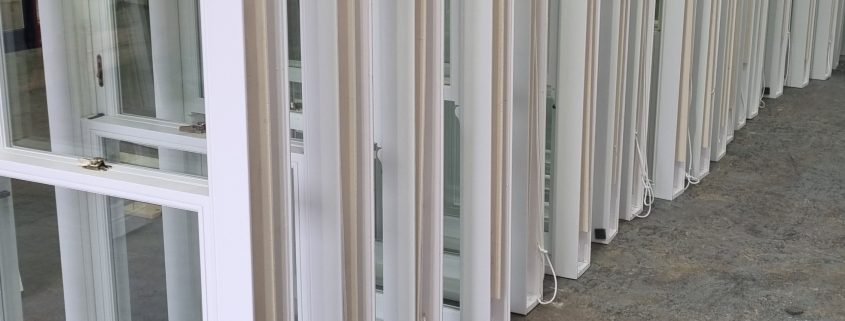
Engineered timber window frames are built from multiple layers of timber bonded together under pressure. Typically three to five laminations, each around 15-25mm thick, are glued with waterproof adhesive so the grain direction alternates between layers.
This alternating grain is the engineering principle. Timber naturally expands and contracts across the grain — but barely at all along it. By crossing grain directions between layers, each lamination restrains the next. The result is a frame that moves significantly less than solid timber when moisture levels change.
Why It Matters for Windows
Windows experience more moisture variation than most building elements. The exterior face gets rained on, the interior face stays dry, and the difference creates stress across the frame section. Solid timber responds by moving — sometimes enough to distort the frame, bind sashes, or crack finishes.
Engineered frames resist this movement. They stay straighter, hold tighter tolerances, and maintain consistent operation through seasonal changes. For flush casement windows where even small distortions show, this stability is particularly valuable.
Where Solid Timber Excels
Engineered timber wins on stability. But solid timber has genuine advantages that matter to certain buyers.
Character and Grain
Solid hardwood — particularly oak — has a visual depth and character that laminated construction can’t replicate. The continuous grain running through the full section creates patterns and colour variations that people value precisely because they’re natural and unrepeatable.
For windows that will be oiled or stained rather than painted, this grain visibility matters. You’re looking at the timber itself, not a painted surface, and the difference between solid oak and laminated sections is visible to anyone who knows what they’re looking at.
Longevity
Solid hardwood windows, properly maintained, outlast engineered alternatives. Oak window frames in good condition routinely last 60-100+ years — there are examples in medieval buildings still functioning after centuries, albeit with considerable repair history.
Engineered softwood frames have a realistic lifespan of 30-40 years. The adhesive bonds are theoretically permanent, but the softwood laminations themselves have a finite life. Meranti engineered frames push closer to 40-50 years.
Repairability
When solid timber develops problems — rot, damage, wear — it can be repaired using traditional joinery techniques. Spliced-in new timber bonds seamlessly with the original. Engineered timber is harder to repair because the laminated structure makes patching less straightforward. Damaged sections often need full component replacement rather than localised repair.
Heritage Authenticity
For listed buildings and strict conservation areas, solid timber may be required. Some conservation officers specifically reject engineered construction as insufficiently authentic for period properties. This is becoming less common as understanding of engineered timber improves, but it’s worth checking before specifying.
Stability: The Key Comparison
This is where the decision usually gets made.
How Much Movement?
Solid softwood frames can move 2-3mm across a 100mm section between wet winter and dry summer. Solid hardwood moves less — roughly 1-2mm for oak. Engineered softwood reduces this to under 0.5mm across the same section.
That difference sounds small, but it affects how windows operate. Half a millimetre of frame distortion might be invisible. Three millimetres can mean a sash that sticks in winter and rattles in summer.
Real-World Implications
Stability matters most for:
- Sliding sash windows — sash operation depends on consistent clearances between sash and frame
- Flush casements — tight tolerances mean any movement shows
- Large windows — bigger frames amplify small percentage movements
- Exposed positions — coastal, west-facing, or high-altitude locations with extreme moisture cycling
For painted casement windows in sheltered positions, solid softwood can work perfectly well. For sliding sashes on an exposed west-facing elevation, engineered construction makes a measurable difference to long-term operation.
Cost Comparison
Price differences are significant and worth understanding.
Engineered Softwood: £800-1,400 per Window
The most cost-effective timber window option. Engineered softwood offers excellent stability, good thermal performance, and a smooth surface ideal for painted finishes. It’s what we manufacture as our standard range and what suits the majority of domestic projects.
Engineered Meranti: £1,000-1,600 per Window
The middle ground. Better natural durability than softwood, finer grain for stained finishes, and the stability benefits of engineered construction. A sensible upgrade for homeowners wanting hardwood character without solid hardwood prices.
Solid Hardwood (Oak): £1,200-2,000 per Window
The premium option. The price reflects the timber cost (quality joinery-grade oak is expensive), the longer manufacturing time (solid timber needs more careful selection and seasoning), and the inherent material value.
What Drives the Price Gap?
About 40% of the difference is raw material cost — solid oak sections are more expensive than laminated softwood. Another 30% is manufacturing time: solid timber requires more careful handling, selection, and finishing. The remaining 30% covers the longer seasoning and quality control process.
Which Should You Choose?
The honest answer depends on three factors.
Budget
If cost matters — and it usually does — engineered softwood provides the best value. You get excellent stability, good performance, and a 30-40 year lifespan at the lowest price point. The painting process and factory-applied finish provide protection that maximises this lifespan.
Appearance
If windows will be painted (white, cream, heritage colours), engineered timber is the rational choice. You can’t see the construction under paint, so you’re paying extra for solid timber that nobody will appreciate visually.
If windows will be oiled, stained, or left natural, solid hardwood is worth the premium. The grain character is visible and adds genuine aesthetic value.
Exposure
Properties in exposed locations — coastal areas, hilltops, west-facing elevations with driving rain — benefit most from engineered construction’s superior stability. Sheltered, south-facing positions in mild climates put less demand on the frame, making solid timber a more viable choice.
The Honest Manufacturer’s View
Here’s what we tell customers: for 80% of domestic projects, engineered softwood is the right choice. It performs better than solid softwood, costs less than solid hardwood, and delivers a 30-40 year service life with proper maintenance.
Solid oak is the right choice for listed buildings requiring authenticity, stained or natural finishes where grain matters, prestige projects where material quality is a priority, and buildings expected to last generations.
Engineered meranti splits the difference well for customers wanting hardwood durability with engineered stability.
Frequently Asked Questions
Is engineered timber as strong as solid timber?
For window applications, yes. The laminated construction actually improves consistency — you don’t get the weak points (knots, grain deviation) that occasionally occur in solid sections. The adhesive bonds used in modern engineered timber are stronger than the timber itself. Frame strength is not a concern.
How long do engineered timber windows last?
Engineered softwood windows typically last 30-40 years with proper maintenance. Engineered meranti extends this to 40-50 years. Solid oak can last 60-100+ years. All figures assume regular maintenance — repainting or re-oiling every 8-12 years with factory-applied microporous finishes.
Can you tell the difference once painted?
No. Under paint, engineered and solid timber windows are visually identical. The only practical difference is long-term stability and operational consistency. If you’re painting your windows, the choice should be driven by performance requirements and budget, not aesthetics.
Do conservation areas accept engineered timber?
Increasingly, yes. Most conservation officers now accept engineered timber window frames, recognising that the material meets or exceeds solid timber performance. A minority still require solid timber for listed buildings. Check with your local authority before specifying.
Which is more sustainable?
Engineered timber arguably uses resources more efficiently — smaller sections of timber are laminated to create frames, reducing waste and allowing use of faster-growing species. However, solid timber’s longer lifespan means fewer replacements over a building’s life. Both are significantly more sustainable than uPVC or aluminium alternatives.
Conclusion
Engineered timber isn’t a budget compromise and solid timber isn’t automatically better. They’re different solutions for different requirements.
Choose engineered for painted finishes, exposed locations, tight-tolerance designs, and value-conscious projects. Choose solid for visible grain, heritage authenticity, maximum longevity, and buildings where material quality is a statement.
At Timber Windows Direct, we manufacture bespoke windows in engineered softwood, engineered meranti, and solid oak. Request your free quote and we’ll recommend the right material for your specific project — honestly, without pushing the more expensive option.