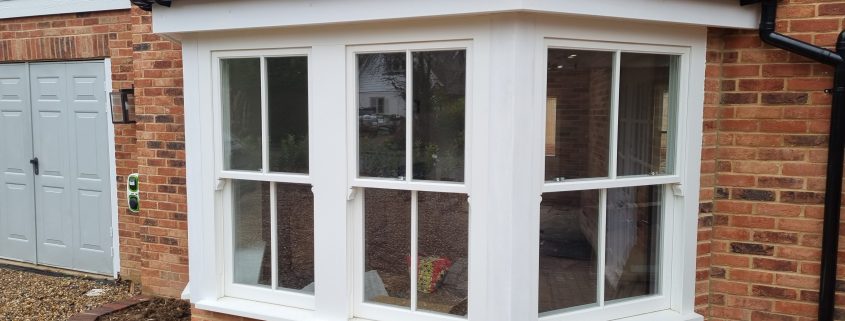
How to Stop Condensation on Timber Windows

In this article, you’ll discover:

  • Why condensation forms on windows (and why it’s not a fault)
  • The difference between interior, exterior, and between-pane condensation
  • Four practical solutions ranked by cost and effectiveness
  • When upgrading your glazing actually makes sense

Waking up to windows streaming with water is frustrating. And if you’ve got beautiful timber windows, it’s natural to worry about moisture causing damage.

Here’s the thing: condensation on windows isn’t usually a window problem. It’s a ventilation and humidity problem. Your windows are simply the coldest surface in the room — where moisture in the air turns back into water droplets.

This guide covers all the causes and solutions, so you can tackle the problem properly.

What Causes Window Condensation?

Condensation is water vapour turning back into liquid when it meets a cold surface. The scientific term is ‘dew point’ — the temperature at which air can no longer hold its moisture. Three factors determine whether you get condensation:

  1. Indoor humidity levels — a family of four produces 10-15 litres of water vapour daily through breathing, cooking, and washing
  2. Surface temperature — how cold the window glass is
  3. Ventilation — whether moist air is being replaced with drier air

Modern homes suffer more because they’re airtight. Older houses were draughty — not ideal for comfort, but excellent for preventing condensation. When you insulate and draught-proof without adding ventilation, moisture has nowhere to go.

Interior vs Exterior vs Between-Pane Condensation

Condensation on the Inside

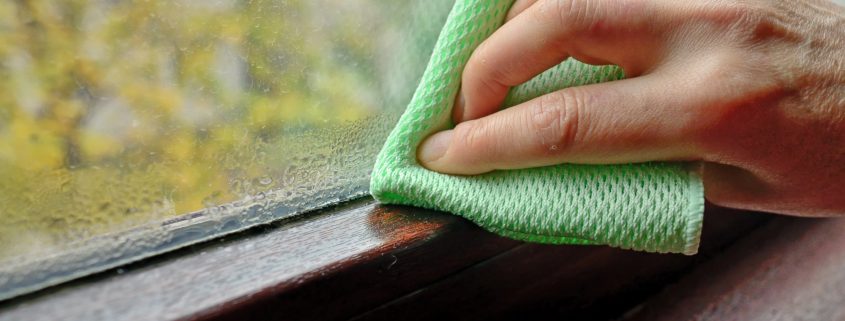
Interior condensation — moisture on the room-facing surface — is the most common type. It indicates high indoor humidity combined with cold window surfaces. Particularly common in bedrooms (we breathe out moisture overnight), kitchens, and bathrooms.

Condensation on the Outside

Here’s something that surprises many homeowners: external condensation is actually a sign of good thermal performance. It happens when the outer glass is so well insulated from your home’s heat that it stays colder than the outside air. If you’ve recently upgraded to low-e glazing and see morning condensation outside, don’t worry — it clears as the sun warms the glass.

Condensation Between the Panes

Moisture trapped between the glass panes means the seal has failed. The inert gas (usually argon) has been replaced by humid air. Failed sealed units need replacing — the good news is that with timber windows, you can usually replace just the glazing unit rather than the whole window.

Four Solutions: From Simple to Significant

Solution 1: Improve Ventilation

The single most effective solution. You need moist air out and drier air in.

Trickle vents are small ventilators built into window frames, providing constant background ventilation without significant heat loss. Building Regulations require them in new windows precisely because they’re so effective. Keep them open — closing them defeats the purpose.

Extract fans in kitchens and bathrooms should run during cooking/bathing and for 15-20 minutes afterwards. Humidistat-controlled fans that activate automatically are particularly useful.

Window opening: Even in winter, five minutes of ‘purge ventilation’ (windows wide open) is more effective than leaving them on a crack all day.

Solution 2: Reduce Humidity at Source

Sometimes you’re producing more moisture than ventilation can handle:

  • Drying clothes indoors: One load releases ~2 litres of water. Use a vented tumble dryer or dry in a closed room with window open.
  • Cooking: Cover pans and always use the extractor.
  • Showers: Keep bathroom door closed; run fan during and after.
  • Unflued gas heaters: Produce huge amounts of water vapour. Avoid if possible.

Solution 3: Use a Dehumidifier

If ventilation alone isn’t enough — particularly in older properties or basements — a dehumidifier can help. Modern refrigerant models extract several litres daily and cost around 3-5p per hour to run.

Aim for 40-60% relative humidity. Below 40% causes dry skin; above 60% encourages condensation and mould. A simple hygrometer (under £10) lets you monitor levels.

Solution 4: Upgrade Your Glazing

If you’ve got single glazing or failed sealed units, upgrading makes sense. Modern double glazing with a decent U-value (1.4 W/m²K or better) keeps the inner glass warmer, making condensation less likely.

Triple glazing and argon-filled units perform even better. But honestly, for most UK homes, good double glazing combined with adequate ventilation solves the problem.

Quick Diagnosis Guide

Where’s the condensation? Here’s what to do:

  • Inside surface → Improve ventilation and reduce humidity sources
  • Outside surface → Nothing to fix — your glazing is working well
  • Between panes → Seal has failed — replace the glazing unit
  • Throughout house → General ventilation problem — consider whole-house approach

Frequently Asked Questions

Why do I get condensation on my new windows?

New windows are more airtight than old ones. Less background ventilation means humidity builds up. It’s not a fault — you just need to adjust habits. Keep trickle vents open and ventilate briefly each day.

Is condensation damaging my timber frames?

Occasional condensation won’t harm properly finished timber. Persistent heavy condensation pooling on sills can eventually penetrate the finish. Wipe away pooled water regularly and maintain frames with microporous paint.

What humidity level should I aim for?

Keep relative humidity between 40-60%. Below 40% causes dry skin and respiratory issues; above 60% encourages condensation and mould. A cheap hygrometer helps you monitor this.

Will secondary glazing help?

Yes — secondary glazing warms the primary window and reduces humidity transfer. A good solution for listed buildings where replacing original windows isn’t permitted.

Getting Condensation Under Control

Window condensation comes down to moisture meeting cold surfaces. Address the moisture, warm up the glass, or improve ventilation — and the problem improves. Start simple: open trickle vents, use extract fans, avoid drying clothes indoors. If that’s not enough, add a dehumidifier or consider upgrading your glazing.

At Timber Windows Direct, all our windows come with integrated trickle vents and high-performance sealed units. Get in touch to discuss replacement windows for your property.

Laminated vs Toughened Glass for Security: The Complete Guide

In this article, you’ll discover:

  • The fundamental difference between laminated and toughened glass
  • Why toughened glass offers zero security benefit
  • How BS EN 356 security ratings work
  • Real cost comparisons for upgrading your glazing

There’s a common misconception: “toughened glass is security glass.” We hear it all the time from homeowners. And it’s completely wrong.

Both glass types are stronger than standard float glass. But they behave completely differently when someone tries to break through. One provides genuine security. The other keeps your family safe from accidents but won’t slow down a burglar.

This guide explains what each type does, how security ratings work, and when you should invest in upgraded glazing for your timber windows.

Toughened Glass: Safety, Not Security

Toughened glass — also called tempered glass — is heat-treated to be 4-5 times stronger than standard glass. The manufacturing process creates surface tension that makes it significantly harder to break.

Here’s the thing: when toughened glass does break, it shatters completely into small, relatively harmless granules. That’s the point — it’s designed as safety glazing, protecting people from dangerous shards. But that same property makes it useless for security — once broken, there’s no barrier left.

Where Toughened Glass Should Be Used

Building Regulations (Approved Document K) require safety glass in ‘critical locations’:

  • Glazing within 800mm of finish floor level
  • Glazing in doors and side panels within 300mm of doors
  • Low-level glazing in bathrooms

Toughened glass is also more resistant to thermal stress — useful where glass experiences temperature differences.

Laminated Glass: The Real Security Option

Laminated glass consists of two or more glass panes bonded with an interlayer — typically PVB (polyvinyl butyral) or EVA resin. This interlayer is the key to everything.

When struck, the outer glass may crack or shatter, but the pieces stay bonded to the interlayer. The glass doesn’t fall away. To get through, an intruder must keep hitting the same spot repeatedly, gradually breaking through layer after layer.

This delay defeats most break-in attempts. Burglars typically want to be in and out within 2-3 minutes. Spending 30-60 seconds hammering at a window that won’t give way — making noise the whole time — isn’t worth the risk.

Additional Benefits

  • Superior sound insulation — the interlayer dampens vibrations
  • UV protection — blocks up to 99% of UV rays
  • Safety compliance — also qualifies as safety glass under Building Regulations

BS EN 356 Security Ratings Explained

BS EN 356 is the European standard for testing glass resistance to manual attack. The standard divides into two categories:

Ball drop tests (P1A to P5A): A steel ball dropped from increasing heights. Measures resistance to opportunistic attack.

Axe tests (P6B to P8B): Glass struck repeatedly with an axe. Measures resistance to sustained attack.

ClassTest MethodTypical Application
P1A3 ball drops from 1.5mBasic residential
P2A3 ball drops from 3mStandard residential upgrade
P4A3 ball drops from 9mHigh-value homes
P6B-P8B30-70+ axe blowsCommercial, high-risk

For most residential applications, P2A or P4A provides excellent security. Higher ‘B’ ratings are designed for banks and commercial premises.

Cost Comparison

Realistic figures for 2026 (per m² of glass):

  • Toughened: +£15-25 over standard float glass
  • Laminated (basic): +£35-45
  • Laminated (P2A): +£45-55
  • Laminated (P4A): +£55-70

For a typical sash window (1.2m²), P2A laminated adds £55-65. For 10-12 windows? Around £500-800 extra. Some insurers offer premium discounts for certified security glazing.

Making the Right Choice

Choose toughened when:

  • Building Regulations require safety glass
  • The window is prone to accidental impact
  • Thermal stress is a concern

Choose laminated when:

  • Security is a genuine concern (ground floor, rear of property)
  • You want improved sound insulation or UV protection
  • Insurance requires or incentivises security glazing

Best of both worlds: Many timber window manufacturers supply double-glazed units with toughened inside and laminated outside — Building Regs compliance plus genuine security.

Frequently Asked Questions

Is laminated glass burglar proof?

No glass is truly burglar-proof, but laminated glass significantly delays break-in attempts. Even basic laminated can withstand several minutes of sustained attack. The delay usually deters opportunistic burglars.

Is toughened glass the same as safety glass?

Toughened is one type of safety glass. Laminated also qualifies under BS 6206 and EN 12600. Both reduce injury risk — toughened by shattering into granules, laminated by holding fragments together.

Which is better for noise reduction?

Laminated provides significantly better acoustic insulation. The PVB interlayer dampens sound vibrations, reducing noise by 3-5 decibels more than standard double glazing.

Do I need security glass on all windows?

Focus on vulnerable points: ground-floor windows, accessible rear windows, glazed doors, and windows hidden from view. Upper floors visible from the street are lower priority.

The Bottom Line

If security is your goal, laminated glass is the only sensible choice. Toughened is excellent for safety but won’t delay a break-in. The upgrade cost isn’t as high as many assume — for ground-floor windows, it’s an investment that makes real sense.

At Timber Windows Direct, we supply windows with any glazing specification. Contact us to discuss the right options for your property.

How Timber Windows Add Long-Term Value to Your Property

In this article, you’ll discover:

  • How windows impact first impressions and kerb appeal
  • Why buyers pay more for period-appropriate materials
  • The EPC effect: how window efficiency affects property value
  • What estate agents say about timber vs uPVC
  • Where timber investment makes the biggest difference

“Will I get my money back if I sell?” It’s one of the first questions homeowners ask when considering timber windows over uPVC.

The short answer: in most cases, yes — and often more. But the real picture is more nuanced than a simple ROI calculation. Timber windows affect property value in several ways, and understanding these helps you make the right decision.

Kerb Appeal: The 10-Second Window

Estate agents will tell you: buyers make up their minds within seconds of seeing a property. And what do they see? The front elevation. The windows.

Windows typically cover 15-25% of a building’s façade. They’re impossible to miss. And while buyers might not consciously think “those are timber windows,” they absolutely register the overall impression — proportions, detailing, quality.

What Buyers Notice

  • Proportion and design: Timber allows for slim glazing bars and authentic period profiles that uPVC can’t replicate
  • Colour and finish: Timber can be painted any colour; uPVC is limited and fades over time
  • Condition: Well-maintained timber looks premium; ageing uPVC looks cheap
  • Consistency: Windows that match the property’s character vs obvious replacements that jar

On period properties especially, uPVC windows can actively detract from value. They signal “budget upgrade” to experienced buyers.

Period Properties: Authenticity Commands a Premium

For Victorian, Edwardian, Georgian, and Arts & Crafts properties, original or sympathetic replacement windows are expected by buyers at the upper end of the market.

What the Data Shows

Properties in conservation areas typically sell for 5-15% more than equivalent properties outside. Part of that premium reflects the architectural integrity that comes with appropriate materials.

Conversely, period properties with uPVC windows often sell below comparable homes. Estate agents report that buyers factor in the cost of “putting right” the windows — and then some, because it’s a hassle they’d rather avoid.

The Premium Market Effect

In higher-value areas, buyer expectations increase dramatically. A Victorian townhouse in a desirable London neighbourhood? Buyers expect timber sash windows. Anything else is a negative.

We’ve had customers tell us their estate agent specifically recommended upgrading from uPVC to timber before marketing — the agent knew it would make a material difference to offers.

Energy Efficiency and EPC Ratings

With proposed legislation potentially requiring minimum EPC ratings for sales and lettings, energy efficiency has become a valuation factor.

Modern timber windows with quality double glazing achieve U-values around 1.2-1.4 W/m²K — better than most uPVC at equivalent price points. Combined with low-e glass and argon filling, timber windows can significantly improve a property’s EPC rating.

Research suggests each EPC band improvement adds roughly 3-5% to property value. For a £400,000 home, moving from D to C could mean £12-20,000.

Longevity: The Investment That Keeps Giving

Here’s something buyers increasingly understand: timber windows last 60+ years. uPVC? 20-30 years.

For an informed buyer, uPVC windows installed 15 years ago represent a liability — replacement within the next decade. Timber windows of equivalent age have decades of life remaining.

This matters for valuations. Estate agents increasingly note window type and condition. “Original timber sash windows, well maintained” is a positive. “uPVC replacement windows, 2008” is neutral at best.

What Estate Agents Actually Say

We asked several estate agents operating in areas with mixed housing stock. Here’s the consensus:

On period properties: “Timber windows are expected. uPVC is a negative that gets flagged in particulars — often unspoken but definitely factored into offers.”

On conservation areas: “Buyers actively look for properties with correct windows. They know getting planning for changes is difficult, so finding a property that’s already right commands a premium.”

On modern properties: “Less differentiation here. Quality matters more than material. But even on newer builds, timber signals ‘premium’ in a way uPVC doesn’t.”

On ROI: “You won’t necessarily get every pound back on a modern property. But on period homes, especially in good areas, timber windows can return 100%+ of investment through increased sale price.”

Where Timber Investment Makes the Biggest Difference

Strongest return:

  • Listed buildings (often required)
  • Properties in conservation areas
  • Victorian, Edwardian, Georgian homes in desirable areas
  • Premium developments where quality is expected

Good return:

  • Character properties generally
  • Properties in affluent areas
  • Homes you plan to keep long-term (value compounds)

Neutral to modest return:

  • Standard modern housing
  • Properties you’ll sell within 5 years
  • Areas where buyers prioritise price over quality

Frequently Asked Questions

Windows as Investment

Timber windows aren’t just a purchase — they’re an investment in your property. The returns come through kerb appeal, period authenticity, energy efficiency, and sheer longevity.

Whether you’re planning to sell soon or stay for decades, timber windows make financial sense for most period and character properties. And even where the immediate ROI is modest, you get daily benefits — aesthetics, comfort, performance — that spreadsheets don’t capture.

At Timber Windows Direct, we manufacture bespoke windows in engineered pine, meranti, and oak. Get in touch to discuss how we can add value to your property.

Timber Windows

Timber Window Maintenance: Debunking the Myths

In this article, you’ll discover:

  • Where the “high maintenance” reputation actually comes from
  • What modern factory finishes have changed
  • A realistic maintenance schedule (spoiler: it’s less than you think)
  • Why timber’s repairability is a feature, not a bug
  • Simple steps to maximise window lifespan

“But don’t timber windows need painting every year?” We hear some version of this question almost daily. And we understand where it comes from — people remember their grandparents scraping and repainting window frames every summer.

Here’s the thing: modern timber windows are fundamentally different products. The manufacturing processes, timber preparation, and finishing systems have transformed what “maintenance” actually means.

Let’s separate myth from reality.

Where the Bad Reputation Came From

The timber windows of the mid-20th century genuinely did require significant maintenance. Understanding why helps explain what’s changed.

The Problems with Old Timber Windows

  • Untreated timber: Wood went straight from sawmill to joiner with minimal preparation
  • High moisture content: Inadequate drying meant frames shrank after installation, creating gaps
  • Oil-based paints: Traditional paints formed hard films that cracked and peeled as wood moved
  • Site finishing: Paint applied in variable British weather, often with inadequate preparation
  • Solid timber: Single pieces of wood prone to warping and twisting with seasonal changes

The result? Windows that needed attention every 2-3 years, and constant battles with peeling paint and swelling frames.

What Modern Manufacturing Has Changed

Virtually every aspect of timber window production has improved.

Engineered Timber Construction

Modern windows use engineered timber — multiple layers bonded with grain directions alternating. This virtually eliminates the dimensional movement that caused old windows to warp, twist, and bind.

Controlled Drying

Timber is kiln-dried to 12-14% moisture content before manufacturing — precisely controlled to match average UK indoor humidity. No post-installation shrinkage, no gaps appearing.

Microporous Finishing Systems

This is the big one. Modern water-based microporous paints and stains work completely differently from old oil-based systems.

Traditional paints sealed the wood surface completely. When moisture inevitably got in (through end grain, joints, or damage), it was trapped. The paint film cracked and peeled from the inside.

Microporous finishes allow the wood to breathe — moisture vapour can pass through the coating. Water can’t get in, but the wood can naturally regulate its moisture content. The finish flexes with the wood’s natural movement instead of cracking.

Factory Application

Quality manufacturers apply finishes in controlled factory conditions — optimal temperature and humidity, proper drying between coats, complete coverage including end grain and rebates. This level of consistency is impossible on-site.

What Maintenance Actually Looks Like

Here’s the realistic schedule for modern factory-finished timber windows:

Annual (10 minutes total)

  • Visual check for any damage or deterioration
  • Clear debris from drainage channels
  • Wipe down frames with mild soapy water

Every 8-12 Years

  • Light sand and apply fresh topcoat
  • Check and replace any worn weatherseals

That’s it. No stripping to bare wood. No filling and priming. Just a light sand and fresh coat of microporous paint or stain.

Factors That Affect Timing

Repairability: The Hidden Advantage

Here’s something that often gets missed in the maintenance discussion: timber windows can be repaired.

Localised rot in a timber frame? Cut out the affected section and splice in new timber. Damaged corner? Repair it. Worn paint? Sand and refinish.

Try doing that with uPVC. When uPVC windows fail — discolouration, brittleness, seal failure, broken mechanisms — you replace the entire window. There’s no repair option.

We’ve seen timber sash windows from the Victorian era — 150+ years old — still functioning after appropriate repairs. That’s not possible with any synthetic material.

What Actually Happens If You Skip Maintenance

Let’s be realistic about what happens if you don’t maintain timber windows:

Year 10-12: The finish starts to look tired, especially on south-facing windows. Slight chalking may appear. The windows still function perfectly.

Year 15-18: More significant weathering on exposed faces. Paint may be thin in places. Still no structural issues, but refinishing becomes more work — might need spot priming.

Year 20+: If still neglected, water starts penetrating bare areas. Localised rot may develop, particularly at joints and end grain. Repair rather than replacement is still usually possible.

The key point: neglecting timber windows doesn’t mean sudden failure. There’s a gradual degradation with plenty of warning signs. Compare this to uPVC, where seals fail suddenly and there’s no repair path.

Simple Steps to Maximise Window Lifespan

  • Keep drainage clear: The most common problem we see. Blocked drainage channels trap water against the frame. Two minutes with a stiff brush annually prevents this.
  • Don’t let vegetation touch frames: Climbing plants and overgrown shrubs hold moisture against timber. Keep a small gap.
  • Address damage promptly: A small chip in the finish is easily touched up. Left for years, it becomes localised rot.
  • Use the right cleaning products: Mild soapy water is fine. Avoid harsh chemicals that might damage the finish.
  • Don’t overpaint: When refinishing, follow manufacturer guidance. Too much paint builds up and can crack.

Frequently Asked Questions

The Reality of Timber Maintenance

The “high maintenance” reputation comes from a different era. Modern timber windows — engineered construction, controlled moisture content, microporous factory finishes — need far less attention than people assume.

A few minutes annually plus a refinish every decade or so. In return, you get windows that last 60+ years, can be repaired rather than replaced, and look beautiful throughout.

At Timber Windows Direct, all our windows are factory-finished with microporous coatings and come with a 5-year finish guarantee. Get in touch to discuss options for your project.

How Modern Timber Windows Deliver Outstanding Energy Efficiency

In this article, you’ll discover:

  • What U-values actually mean — and what numbers to look for
  • Why timber naturally outperforms aluminium and uPVC on thermal efficiency
  • Double vs triple glazing: when the upgrade makes sense
  • How modern engineering has transformed timber window performance
  • Real numbers on potential energy savings

With energy bills where they are, every homeowner we speak to asks about thermal performance. And rightly so — windows can account for 20-25% of a home’s heat loss.

Here’s something that surprises many people: timber windows often outperform uPVC and aluminium on energy efficiency. Wood is a natural insulator. Combined with modern glazing technology and precision engineering, today’s timber windows achieve performance levels that would have been impossible a decade ago.

Let’s break down exactly how timber windows keep your home warm — and your energy bills down.

Understanding U-Values: The Key Performance Metric

If there’s one number you need to understand when comparing windows, it’s the U-value.

What Is a U-Value?

A U-value measures the rate of heat transfer through a building element — in this case, your window. It’s measured in watts per square metre kelvin (W/m²K). The lower the number, the better the insulation.

Think of it this way: a U-value of 1.4 means 1.4 watts of heat energy passes through each square metre of window for every degree of temperature difference between inside and outside.

What the Numbers Mean

Building Regulations (Part L) currently require replacement windows to achieve 1.4 W/m²K or better. But “meeting minimum standards” isn’t what we’d recommend — aiming for 1.2 or below makes a real difference to comfort and bills.

Why Timber Is a Natural Insulator

Here’s something the aluminium window industry doesn’t like to talk about: thermal conductivity.

Timber has a thermal conductivity of approximately 0.13 W/mK. Aluminium? Around 160 W/mK. That means aluminium conducts heat over 1,000 times faster than timber.

This is why aluminium windows require “thermal breaks” — plastic or polyamide barriers inserted into the frame to interrupt heat flow. Without them, the frame itself would act as a thermal bridge, conducting heat straight out of your home. Even with thermal breaks, aluminium frames typically achieve worse overall U-values than timber.

Wood’s cellular structure naturally traps air, creating insulation without any additional engineering. It’s warm to the touch even in winter — try that with an aluminium frame.

The Glazing Matters: Double vs Triple

While the frame is important, roughly 70-80% of a window’s area is glass. The glazing specification makes an enormous difference.

Modern Double Glazing

Today’s double glazing is far superior to the sealed units of 20 years ago. Key improvements:

  • Low-e coatings: Low-emissivity glass has a microscopically thin metallic coating that reflects heat back into the room while still allowing light through
  • Argon filling: Argon gas between panes insulates better than air (argon is denser, reducing convection and conduction)
  • Warm-edge spacers: The spacer bars separating the panes now use lower-conductivity materials, reducing heat loss at the edges

A quality timber window with low-e double glazing, argon filling, and warm-edge spacers achieves around 1.2-1.4 W/m²K — significantly better than the 1.4 minimum.

When Triple Glazing Makes Sense

Triple glazing adds a third pane and a second gas-filled cavity. This pushes U-values down to 0.8-1.0 W/m²K — exceptional performance.

But triple glazing isn’t always the answer. It’s heavier (requiring more robust hardware), more expensive (typically 25-35% more than double), and the law of diminishing returns applies — going from 2.8 to 1.4 saves more energy than going from 1.4 to 0.8.

Triple glazing makes most sense for:

  • North-facing rooms with minimal solar gain
  • Exposed locations with high wind exposure
  • Passivhaus or low-energy builds
  • Properties in particularly cold regions

Modern Engineering: How Timber Windows Have Evolved

Some people still associate timber windows with draughty Victorian sashes. The reality is that modern engineered timber windows are precision-manufactured products.

Engineered Timber Construction

Engineered timber uses multiple layers of wood bonded together with grain directions alternating. This virtually eliminates warping and twisting — the traditional source of draughts in old timber windows.

Precision Manufacturing

Components are cut using CNC machinery to tolerances of 0.1mm. That precision means perfect fits, consistent gaps for weatherstripping, and airtight seals when closed.

Modern Weatherstripping

Contemporary weatherseals use durable EPDM rubber or silicone that maintains flexibility for decades. Multiple seal lines (typically two or three around each opening sash) create an effective barrier against draughts and water ingress.

Real-World Energy Savings

What does all this mean for your heating bills? Let’s look at realistic numbers.

Replacing old single-glazed windows (U-value ~5.0) with modern double-glazed timber windows (U-value ~1.2) typically reduces heat loss through windows by around 75%. For a house losing £800/year through inefficient windows, that’s potentially £600 saved annually.

Replacing 20-year-old double glazing (U-value ~2.8) is less dramatic but still significant — typically 50-60% reduction in window heat loss, or £300-400 savings for the same house.

Important caveat: These figures are indicative. Actual savings depend on property size, exposure, heating patterns, and other factors. What’s certain is that better U-values mean lower bills.

Choosing the Right Specification

Here’s our practical recommendation for most UK homes:

  • Timber frames: Engineered softwood for most applications, hardwood for exposed locations or where maximum longevity is required
  • Glazing: Double glazing with low-e glass and argon filling — achieves 1.2-1.4 W/m²K at reasonable cost
  • Consider triple glazing: For north-facing rooms, exposed locations, or if building to high energy standards
  • Don’t forget ventilation: Trickle vents are required by Building Regulations and essential for air quality in airtight modern homes

Frequently Asked Questions

Investing in Efficiency

Energy-efficient windows aren’t just about saving money — though that’s a compelling reason. They’re about comfort. Rooms without cold spots near windows. No condensation streaming down glass on winter mornings. A home that holds its heat.

Timber windows, with their natural insulating properties and compatibility with the best glazing technologies, deliver the performance modern homes need.

At Timber Windows Direct, we manufacture bespoke timber windows with U-values with U-values certified at 1.4 or lower. Get in touch for a free quote and we’ll help you find the right specification for your home.

Timber vs uPVC vs Aluminium: Which Window Material Is Right for Your Home?

In this article, you’ll discover:

  • Real cost comparisons including whole-life value (not just upfront prices)
  • How thermal performance differs between materials — with actual U-values
  • Honest assessments of maintenance requirements for each option
  • Which material suits different property types (period homes, modern builds, conservation areas)
  • The sustainability truth that manufacturers don’t always tell you

“What’s the best window material?” It’s probably the question we get asked most often. And the honest answer is: it depends.

We manufacture timber windows, so you might expect us to say timber every time. But we’ve been in this industry long enough to know that the right choice varies by property, budget, and priorities. What we won’t do is pretend uPVC or aluminium don’t have their place.

What we will do is give you the facts — real numbers, honest comparisons, and the information you need to make the right decision for your specific situation. No marketing spin.

The Real Cost Picture: Upfront vs Whole-Life

Let’s start with what everyone wants to know: price. But here’s the thing — upfront cost and whole-life cost are very different numbers.

Typical UK Prices (2026)

Prices for standard casement windows, supply only. Installation adds £100-200 per window.

See that cost-per-year column? That’s the number that actually matters. Yes, timber costs more upfront — typically 80-100% more than uPVC. But when you factor in lifespan, timber often works out cheaper over time. And that’s before considering that uPVC can’t be repaired when it fails — you replace the whole window.

Thermal Performance: The Numbers That Matter

With energy costs where they are, thermal performance has become a major factor. Here’s how the materials compare:

Material Conductivity

Timber is naturally insulating — its cellular structure traps air. The thermal conductivity of softwood is around 0.13 W/mK. Aluminium? 160 W/mK. That’s over 1,000 times more conductive.

This is why aluminium windows need thermal breaks — plastic or polyamide barriers that interrupt the metal and reduce heat transfer. Without them, aluminium frames would be thermal bridges, conducting heat straight out of your home.

uPVC falls somewhere in between — it’s a reasonable insulator but not as good as timber.

Whole Window U-Values

The U-value measures how much heat passes through a window — lower is better. Building Regulations currently require 1.4 W/m²K or better for new windows.

  • Timber (double glazed): 1.2-1.4 W/m²K
  • Timber (triple glazed): 0.8-1.0 W/m²K
  • uPVC (double glazed): 1.2-1.6 W/m²K
  • Aluminium (double glazed): 1.4-1.8 W/m²K (with thermal break)

Quality timber windows with low-e glass and argon filling consistently achieve the best thermal performance.

Durability and Maintenance: The Honest Truth

Here’s where we need to address the elephant in the room: timber maintenance.

Timber

Yes, timber windows need maintenance. Modern factory-finished timber with microporous coatings needs repainting every 8-12 years. You’ll also want to do annual checks and keep drainage channels clear.

But here’s what many people don’t realise: that maintenance means timber windows can last 60+ years. When issues occur, you repair — a splice for localised rot, sanding and refinishing for worn paint. The whole window rarely needs replacing.

uPVC

uPVC is marketed as “maintenance-free.” And it’s true you won’t be painting it. But uPVC isn’t problem-free:

  • After 15-20 years, discolouration starts (especially on south-facing elevations)
  • The material becomes brittle with UV exposure
  • Seals fail, gaskets perish
  • And when it fails? You can’t repair uPVC — you replace the whole window

Aluminium

Aluminium is genuinely low maintenance — powder-coated finishes last 25-30 years, and the material doesn’t rot, warp, or degrade like uPVC. The main issues are seal failure and thermal break degradation in cheaper products.

Aesthetics: Which Suits Your Property?

This is where the choice often becomes clearer.

Period Properties and Conservation Areas

For Victorian, Edwardian, or Georgian properties — especially in conservation areas — timber is often the only appropriate choice. Planning authorities typically reject uPVC on listed buildings and may refuse it in conservation areas.

Timber sash windows with authentic profiles, slim glazing bars, and period-appropriate detailing maintain the character that makes these properties special.

Modern and Contemporary Buildings

For modern architecture with large glazing areas and minimal frames, aluminium often makes sense. The strength allows for slimmer profiles and larger spans. The clean, industrial aesthetic suits contemporary design.

That said, timber can also work beautifully in modern homes — particularly flush casement windows with their clean lines.

Standard Residential

For typical UK housing stock — 1930s semis, post-war estates, modern developments — any material can work. This is where budget and priorities drive the decision.

Sustainability: The Full Picture

We’ve covered this in detail elsewhere, but here’s the summary:

  • Embodied carbon: Timber ~14kg per frame, uPVC ~160kg, aluminium ~200kg
  • Carbon storage: Only timber stores carbon throughout its lifespan
  • End of life: Timber is biodegradable or recyclable; uPVC degrades with recycling; aluminium is infinitely recyclable but energy-intensive to process
  • Longevity: One set of timber windows replaces 2-3 sets of uPVC over the same period

Making Your Decision: A Practical Guide

Choose timber if:

  • You own a period property or live in a conservation area
  • Long-term value matters more than upfront cost
  • Sustainability is a priority
  • You want windows that can be repaired, not replaced
  • Maximum thermal performance matters

Choose aluminium if:

  • You have a contemporary property with large glazing areas
  • You want slim frames and maximum glass
  • Zero maintenance is essential

Choose uPVC if:

  • Budget is the primary constraint
  • You’re not in a conservation area
  • You plan to move within 15-20 years

Frequently Asked Questions

The Bottom Line

There’s no universally “best” window material — it depends on your property, budget, and priorities. But if you’re looking at the full picture — cost over time, thermal performance, sustainability, repairability, and aesthetics — timber wins in most categories.

At Timber Windows Direct, we manufacture bespoke timber windows in engineered pine, meranti, and oak. We’re happy to discuss whether timber is right for your specific situation — and if it’s not, we’ll tell you. Get in touch for honest advice and a free quote.

Why Timber Windows Are the Most Sustainable Choice for UK Homes

In this article, you’ll discover:

  • Why timber outperforms uPVC and aluminium on environmental impact
  • What FSC and PEFC certification actually means (and why it matters)
  • How timber windows store carbon for their entire lifespan
  • The real numbers on embodied energy and lifecycle impact
  • How to verify sustainability claims when choosing a supplier

Here’s something that surprised us when we first looked at the data: a typical uPVC window frame generates roughly 160kg of CO2 during manufacturing. The equivalent timber frame? Around 14kg. That’s not a typo.

We’ve been manufacturing timber windows for over a decade, and sustainability questions have gone from occasional to constant. Homeowners aren’t just asking about U-values anymore — they want to know about embodied carbon, recyclability, and where the materials actually come from.

The good news? Timber genuinely is the most sustainable window material available. But the details matter — not all timber products are equal, and some “eco-friendly” claims don’t hold up to scrutiny. Let’s cut through the marketing and look at what actually makes timber the responsible choice.

Embodied Carbon: The Numbers Nobody Talks About

When we talk about sustainable windows, most people jump straight to energy efficiency — how well the window keeps heat in. That matters, obviously. But there’s a bigger picture that often gets overlooked: embodied carbon.

Embodied carbon is the total CO2 generated to produce something — from raw material extraction through manufacturing to delivery. For building materials, this can be substantial.

How Window Materials Compare

Source: Data based on BRE Environmental Profiles and lifecycle assessments for standard UK window sizes.

To be honest, when we first saw these numbers, even we were surprised by the gap. Aluminium’s figure reflects the enormous energy required for smelting — even recycled aluminium uses significant electricity. uPVC involves petrochemicals and energy-intensive polymerisation.

Carbon Storage: Timber as a Carbon Sink

Here’s something that makes timber unique among building materials: it doesn’t just have low embodied carbon — it actually stores carbon throughout its useful life.

During growth, trees absorb CO2 through photosynthesis. That carbon remains locked in the timber even after it’s harvested and manufactured into products. A cubic metre of timber stores approximately one tonne of CO2.

What does that mean in practice? A set of timber windows for an average UK home stores roughly 200-300kg of carbon for their entire 60+ year lifespan. That’s carbon that would otherwise be in the atmosphere.

When those windows eventually reach end-of-life, the timber can be recycled into other products (keeping the carbon locked up) or, if disposed of responsibly, will biodegrade naturally. Compare that to uPVC — which can be recycled but degrades with each cycle and will eventually end up in landfill or incineration.

FSC and PEFC: What Certification Actually Means

We’ve had customers ask: “How do I know the timber actually comes from sustainable sources?” It’s a fair question. The answer lies in certification.

FSC (Forest Stewardship Council)

FSC certification means the timber comes from forests managed according to strict environmental, social, and economic standards. The chain of custody is tracked from forest to final product — you can verify exactly where the timber originated.

FSC standards require replanting, biodiversity protection, and respect for indigenous communities and workers’ rights. It’s the most rigorous forestry certification available.

PEFC (Programme for Endorsement of Forest Certification)

PEFC is an umbrella organisation endorsing national certification schemes. While slightly less stringent than FSC on some criteria, it covers more of the world’s certified forests — particularly smaller woodland owners who find FSC certification costs prohibitive.

Our approach: At Timber Windows Direct, we use FSC-certified timber as standard. When you receive your windows, you’ll get documentation showing the chain of custody — exactly where the wood came from.

Thermal Performance: Sustainability in Use

Sustainability isn’t just about manufacturing — it’s about performance over the product’s lifetime. And here, timber has natural advantages.

Timber is a natural insulator. Its cellular structure traps air, creating thermal resistance without additional materials. The thermal conductivity of softwood is around 0.13 W/mK — compared to aluminium at 160 W/mK. That’s why aluminium windows need thermal breaks, while timber doesn’t.

Modern engineered timber windows with quality double glazing achieve U-values around 1.4 W/m²K. With triple glazing and low-e glass, you can get below 1.0 W/m²K.

Better thermal performance = lower heating bills = reduced carbon emissions over the window’s 60+ year lifespan. The initial embodied carbon advantage compounds over time.

Longevity: The Most Sustainable Window Is One You Don’t Replace

There’s a sustainability factor that often gets overlooked: lifespan.

A quality timber window, properly maintained, will last 60 years or more. We’ve seen Victorian sash windows still functioning after 150 years. uPVC? Typically 20-30 years before discolouration, brittleness, and seal failure make replacement necessary.

That’s potentially three sets of uPVC windows — with their associated manufacturing emissions and disposal issues — for every one set of timber windows.

And when timber windows do need attention, they can be repaired rather than replaced. Localised rot? Cut it out and splice in new timber. Paint peeling? Sand and refinish. Try doing that with uPVC once it starts degrading.

How to Verify Sustainability Claims

Not every “sustainable” claim holds water. Here’s what to check when choosing timber windows:

  • Ask for certification: FSC or PEFC logos should come with chain-of-custody documentation, not just marketing claims
  • Check the timber species: European softwoods (pine) and hardwoods like meranti from managed European forests are lower-impact than tropical hardwoods shipped globally
  • Look at finishing: Water-based, microporous paints and stains are more environmentally friendly than solvent-based alternatives
  • Consider the glazing: Argon-filled units with low-e glass maximise thermal performance
  • Ask about waste: Quality manufacturers minimise offcuts and recycle timber waste

Frequently Asked Questions

Making the Sustainable Choice

When you look at the full picture — embodied carbon, carbon storage, thermal performance, longevity, and end-of-life — timber is clearly the most sustainable window material available. It’s not even close.

The key is choosing quality. FSC-certified timber from a reputable manufacturer, properly finished and correctly installed, will serve your home for generations while minimising environmental impact.

At Timber Windows Direct, we manufacture bespoke timber windows using FSC-certified engineered pine, meranti, and oak. Every window comes with full documentation of timber origin and certification. Get in touch for a free quote and let’s discuss the sustainable option for your home.

How to measure for a timber sash window.

Traditional timber sliding sash windows are fitted into a reveal or recess in the brick work, both the sides & across the head (top of the window). There is NO recess at the bottom of the window, the hardwood sills are designed to sit on a flat surface.

When ordering a timber sash window, you will need the total window size so it is important to take into account the amount of window sitting hidden behind the reveal. We would recommend exposing approximately 30mm of the outer lining of the sash box on the top, left and right sides:


IMPORTANT – Check the internal width and height are larger than the external. It is also advisable to expose the overall size of the window by removing the internal architraves or linings, this can be a reassuring way to ensure that the windows are the correct size.


Sliding sash windows sitting in a standard opening.

New build properties tend not to have a brick recess for sliding sash windows, this is because they are designed to take spiral balance sash windows which can be fitted in a more conventional way, so the usual tight brick to brick measurement less 10mm clearance is the way to go with this. Traditional timber sash windows can also be fitted in a flush opening without a sash reveal, this is usually known as ‘brick to brick fitting’. When fitted brick to brick the outside facing side of a sash box can be ‘dressed’ with some trim if you feel this is required.

Should you require any further assistance in measuring sliding sash windows or any other type of window, please do not hesitate in contacting one of us. Why not send us a few photos of your windows and we’ll talk you through it!

Timber Windows

Everything you need to know about Timber Bi-Fold Doors

Do you have a spectacular view of the city, a lovely garden or patio or even an outdoor landscape? Do you get the feeling that your existing doorways to these areas are simply not conveying the true impact of the view? Transform the look and feel of your home and incorporate aluminium bi-fold doors. Step outside of your comfort zone and consider bi fold doors. They provide one of the best ways that you can enjoy both outdoor and indoor living.

Bi-fold doors are one of the best ways to allow a homeowner to maximise a wide doorway. These special doors can be configured to integrate multiple door panels, typically two to eight, depending on the width of your doorway. Depending on the configuration they either stack to one or both sides.

Open plan living is an enviable feature of modern homes, and with their ability to be installed in very wide openings, a bi-fold door allows you to connect your living room with an outdoor entertaining area by essentially easily removing entire wall between the two spaces. This allows you to, in many cases, have your kitchen, living, dining, and outdoor areas all linked and open, offering a sensational aesthetic to your home. Even when they are closed, they offer a terrific amount of light and a near unobstructed view. This would be one of the most common ways to use a Bi-Fold Door.

How Do Timber Bi-fold Doors Work?

Interior and exterior bi-folding doors both use a simple track system that runs along the panels, which are connected on a train. The doors work by folding in on themselves and then gliding along the tracking system with the help of a series of wheels or a lower tracking system, which both lead to a smooth motion and quiet operation.

Bi-fold doors generally come in pairs, with two doors folding to one side or with four that part in the centre with two doors folding back to either side. Your bi-fold doors will usually come with all tracking and fittings already installed, can be opened either inwards or outwards. It’s this kind of flexibility that has led to their popularity in recent years amongst open-minded homeowners.

Most bi-fold doors will have anywhere between two and seven panels, all of which will be connected with hinges and attached to the roller track at the top or bottom of the door (or both). They are remarkably easy to operate, though it’s advised that you don’t get too carried away as if you use too much force you could end up pulling the doors out of the tracking system

In many homes, there are living and dining sections that next to each other but divided by a wall, or not divided at all. Sometimes, open plan isn’t always the best option, as you may wish to improve privacy or entertain two different groups at once. Installing bi-fold doors internally as a divided wall is a great way to make one large room into 2 without making the rooms seem boxed in or small. The glass panels keep noise transference to a minimum, but allow visibility into the adjoining room. This is great for families with small children for example, as you can have a dinner party in one room, with the kids table in the connecting room, where you have total visibility but can also enjoy some peace & quiet. Another example is if you work from home, where you could segment off a section of the living area during business hours, but then open it back up the rest of the time.

Above we talked about connecting two rooms, but by installing multiple bi-fold doors, you can turn your dining room into an outdoor entertaining area, simply by removing the walls around it. Depending on the layout of your home, you could install 2 or 3 bi-fold doors to make up the walls of the dining area, then when the weather’s beautiful, you can easily remove all the walls and dine alfresco!

If you’re lucky to have a bedroom that gazes upon the abundance of natural beauty, then why not take full advantage of it. This is one of the most beautiful ways to use Bi-fold doors. When it’s perfect weather, you can remove an entire wall to make the most of the sunshine and cool sea breeze, and even when it’s not the best conditions outside, you’ll have an unobstructed view of the reason you’re still in your PJ’s watching Netflix in bed.

Choosing the right bi-fold door for your renovation project can be both exciting and overwhelming. You’ve got a grand vision for your new space and a lot of questions about products, materials and styles. Although your contractor may make suggestions as to which material or brand to use, ultimately the final decision is up to you.

Bi-fold doors come in a range of sizes, glass types, colours and materials. One of the most important factors to consider when selecting the right bi-fold doors is which material to use for your project. When making your selection, you should note that not all materials are created equal. In fact, each of these materials has different properties which help to determine their price point.

Timber is one of the oldest building materials known to man. It is all natural, non-toxic and a high quality, timber doors can last many, many years. Timber products come from FSC certified forests which means that they are harvested from forests that are responsibly managed and farmed. Wood that comes from an FSC certified forest is replaced with new growth for future use.

Although more expensive than PVC, selecting timber for your bi-fold doors can greatly elevate the look of your project. it may also help to create an ambiance that is warm, welcoming and even rustic.

Timber Windows

Should I choose Weights or Springs?

Traditionally, all sliding sash windows were operated by cast iron weights.

Weights

A sash box of 98mm is built into each side of the window, which houses the weights. This is then attached to a piece of sash cord, which travels over a pulley in the top corners of the window and attaches to the sash that will be sliding. The weight is selected to closely match the weight of the sash that is sliding, so that a perfect counterbalance is achieved and movement of the otherwise heavy window sash is as effortless as possible.

Spring Balances

The use of weights and pulleys in modern sliding sash windows has declined over recent years, and has largely been replaced by the spring balance system. The Springs work using similar principles of counterbalancing, but achieve it through the use of two springs inside a PVC tube. Spring balances are normally visible on the inside of the window. However, a thin cover paint matched to the window and allow total concealment is used in manufacturing. This makes the windows with spring balances almost perfectly reflect the style of those with weights and pulleys.

To aid in opening windows, as well as hold windows open and closed, spiral balances utilize a spiral-shaped rod within a tube. This rod connects to a spring, which is what provides the tension for supporting the sash. The tension is adjusted by being wound to match the sash it is supporting.

Should I choose weights or springs?

Both systems have advantages and disadvantages, and the right system for you will depend on your location, the reveals in the window opening and the desired impact you are hoping for. Weight and pulley systems have an unmistakeable historic feel, they fit neatly behind traditional reveals, the systems last longer (many decades) and repair only requires fitting a new sash cord. Spiral balances systems fit neatly into all building/reveal profiles without reducing light.

If you would like a quote for sash windows with Weights or springs please get in touch.