
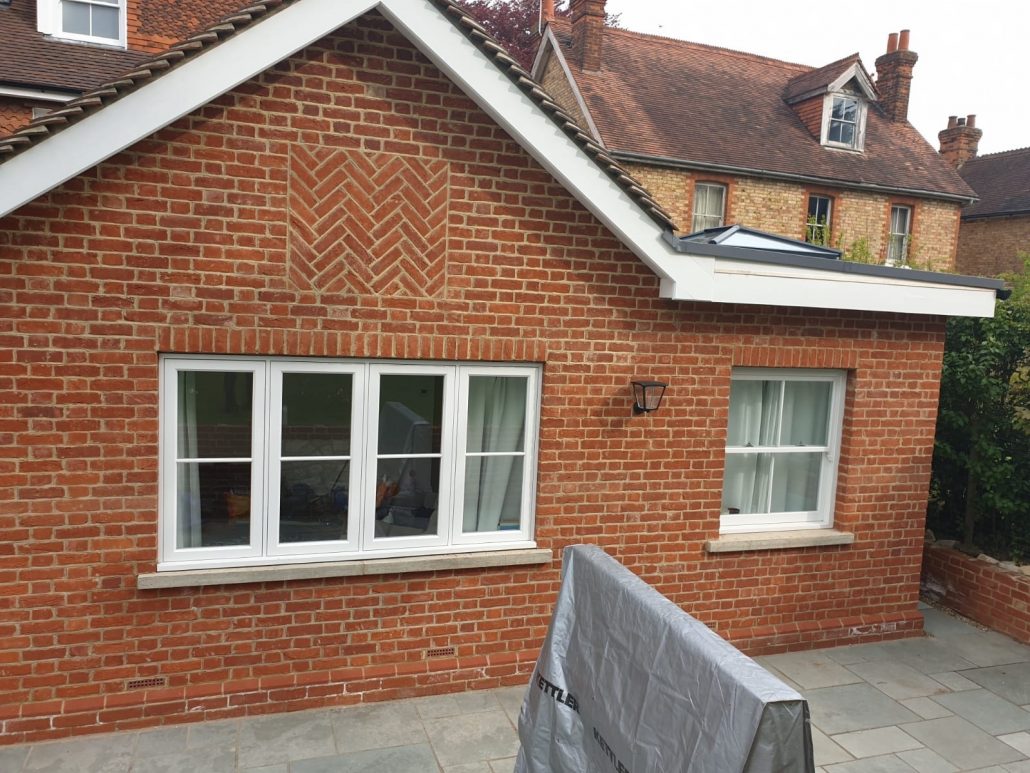
Flush Casement Windows: Traditional Style for Period Properties
In this article, you’ll discover:
- What makes flush casement windows different from standard casements
- Why conservation officers specifically require flush designs
- Cost premium versus standard casement windows (and whether it’s justified)
- Hardware and ironmongery options for authentic period styling
- Which timber species suit flush casement construction
- How to specify flush casements for Building Regulations compliance
Introduction
The difference between a flush casement and a standard stormproof casement is subtle — roughly 15mm of timber. But that small detail determines whether your windows look authentically period or obviously modern.
In a flush casement, the opening sash sits level with the outer frame when closed. No overlap, no stepped joint, no shadow line. The result is a clean, flat facade that defined window design from the Georgian era through to the early twentieth century.
It’s not just an aesthetic preference. Conservation officers in many areas specifically require flush casements for replacement windows in period properties. Getting this wrong means a refused application and wasted money.
We manufacture bespoke flush casement windows in engineered softwood, meranti and oak. This guide explains what makes them distinctive, when they’re required, and how to specify them correctly.
What Makes Flush Casements Different?
The distinction is straightforward but important.
Standard Stormproof Casements
In a stormproof casement, the sash overlaps the frame when closed. The sash sits proud — projecting forward from the frame face. This creates a stepped joint that sheds rain effectively and produces visible shadow lines on the facade.
Stormproof profiles developed during the twentieth century. They’re practical, weatherproof, and suit post-war housing, cottages, and contemporary designs. But they’re historically wrong for Georgian, Victorian, and Edwardian properties.
Flush Casement Design
In a flush casement, the sash closes into a rebate so its front face aligns exactly with the frame. From outside, the window presents a single flat plane — frame and sash on the same level.
This is how casement windows were built before mass production changed everything. Every pre-Victorian casement you’ll find in a period property uses flush construction. The design requires more precision in manufacture — tolerances are tighter because there’s no overlap to hide imperfections.
Why the Difference Matters
On a Georgian townhouse or Victorian villa, stormproof casements look wrong. The projecting sash profile didn’t exist when these buildings were designed. Conservation officers know this, architects know this, and increasingly, homeowners notice too.
The visual impact is significant. A terrace of period houses where one property has stormproof casements stands out immediately — and not in a good way.
Conservation Areas and Planning Requirements
Flush casements aren’t just a style preference in many locations — they’re a planning requirement.
When Flush Design Is Required
Conservation officers typically require flush casements for:
- Listed buildings — Grade I, II* and II listings almost always demand flush profiles
- Conservation areas with Article 4 directions — where permitted development rights are removed
- Properties visible from public highways in designated conservation areas
- Period buildings where original windows were demonstrably flush design
The requirement stems from a simple principle: replacement windows should match the character of what was originally there. If the originals were flush, replacements should be too.
What Officers Actually Assess
Planning applications for window replacement get scrutinised on specific details:
- Profile depth — flush alignment, not projecting sashes
- Glazing bar pattern — matching original configurations
- Material — timber is almost always expected over uPVC
- Opening method — matching original (side-hung, top-hung)
- Ironmongery — traditional styles, not modern fittings
Getting the profile wrong is one of the most common reasons for refusal. Officers can — and do — require removal of incorrectly specified windows after installation.
Pre-Application Advice
Before committing to any specification, contact your local conservation officer for pre-application advice. It’s free, informal, and saves expensive mistakes. Most officers are helpful when you demonstrate willingness to get things right.
Cost: Flush vs Standard Casement
Flush casements carry a premium over standard stormproof casements. Here’s what that looks like in practice.
The 15-20% Premium
Expect flush casements to cost roughly 15-20% more than equivalent stormproof casements. For a typical three-bedroom Victorian terrace needing 6-8 windows, that translates to approximately £600-1,500 additional cost across the project.
The premium reflects tighter manufacturing tolerances, more complex weatherproofing (without the overlap, weather seals work harder), specialist hardware, and higher finishing requirements — imperfections show more on a flat-plane window.
Is the Premium Justified?
For period properties — particularly listed buildings and those in conservation areas — the premium isn’t optional. You’ll pay it because planning requires it.
Even where not required, flush casements often represent good value for period homes. The visual improvement is substantial, and authentic-looking windows add measurable value to period properties. Estate agents consistently report that sympathetic fenestration matters to buyers of character homes.
Where Standard Casements Are Fine
Don’t pay the flush premium where it isn’t needed. Post-war housing, contemporary builds, and properties with no period character gain nothing from flush profiles. Standard stormproof casements are perfectly appropriate — and more cost-effective.
Hardware and Ironmongery
Hardware choice makes or breaks the period authenticity of flush casement windows.
Hinge Options
Flush casements use different hinge types than stormproof windows. Butt hinges are the traditional choice — visible when the window is open, period-appropriate, and what conservation officers expect. Cranked hinges allow the sash to clear the frame when opening. Concealed hinges offer a modern alternative but lack authenticity.
For conservation area applications, butt hinges are usually the safest specification.
Handle Styles
Traditional flush casement handles include cockspur handles (classic for painted flush casements), espagnolette handles (operating multi-point locking for modern security), and peg stays for holding sashes open. Black antique iron, pewter, and polished brass suit most period properties. Avoid satin chrome and white plastic — both read as modern regardless of handle style.
Timber Species for Flush Casements
The timber choice affects both appearance and long-term performance.
Engineered Softwood
Engineered softwood offers excellent stability — important for flush casements where tight tolerances mean any warping shows immediately. Laminated construction resists movement better than solid timber in most conditions. Lifespan of 30-40 years with proper maintenance. The most cost-effective option for painted finishes.
Meranti
Meranti hardwood provides natural durability (40-50 years) and fine grain that takes stain and paint beautifully. Its dimensional stability suits the precision requirements of flush construction. A strong middle-ground choice.
Oak
The premium choice for period properties where natural timber character is desired. Oak’s visible grain and natural colour complement Georgian and Victorian architecture beautifully. Lifespan of 60+ years. Oak flush casements can be left natural — the only timber option where an unpainted finish looks genuinely period-appropriate.
Thermal Performance and Weatherproofing
Flush casements must meet the same Building Regulations as any replacement window.
Building Regulations Part L requires a maximum U-value of 1.4 W/m²K. Modern flush casements comfortably achieve this with standard double glazing — typical performance sits between 1.2-1.4 W/m²K.
The flush profile creates a different weatherproofing challenge. Without the overlapping sash, weather seals carry more responsibility. Quality flush casements use perimeter compression seals, drainage channels, and precise machining to achieve identical weather resistance to stormproof designs. Budget manufacture is where problems appear — this isn’t a specification to economise on.
Trickle vents can be incorporated into flush casement frames, meeting Part F requirements (8000mm² per habitable room) without compromising the clean facade.
Frequently Asked Questions
What is the difference between flush and stormproof casement windows?
In a flush casement, the opening sash sits level with the outer frame — creating a flat, clean facade. In a stormproof casement, the sash overlaps the frame, projecting forward. Flush casements are historically correct for pre-twentieth-century properties, while stormproof designs are a more modern development suited to cottages and post-war housing.
Do conservation areas always require flush casement windows?
Not always, but frequently. Properties with Article 4 directions in conservation areas typically require flush casements if the originals were flush design. Listed buildings almost always require them. Contact your local conservation officer for specific requirements before specifying — pre-application advice is free.
Are flush casement windows more expensive?
Yes — typically 15-20% more than equivalent stormproof casements. The premium reflects tighter manufacturing tolerances, specialist hardware, and more complex weatherproofing. For a typical project of 6-8 windows, expect roughly £600-1,500 additional cost.
Can flush casement windows be double glazed?
Absolutely. Modern flush casements incorporate double or triple glazing meeting Building Regulations Part L (U-value 1.4 W/m²K maximum). The traditional external appearance is maintained while delivering contemporary thermal performance. There’s no energy efficiency compromise.
How long do flush casement windows last?
Lifespan depends on timber species: engineered softwood 30-40 years, meranti 40-50 years, oak 60+ years. Proper maintenance — repainting or re-oiling on the manufacturer’s recommended cycle — is essential. Factory-applied microporous finishes typically need refreshing every 8-12 years.
Conclusion
Flush casement windows are the correct choice for Georgian, Victorian, and Edwardian properties — and often the only choice conservation officers will accept. The 15-20% premium over standard casements reflects genuine manufacturing complexity, not marketing markup.
Specify the right timber species for your situation, choose historically appropriate ironmongery, and ensure the manufacturer can achieve the tight tolerances flush construction demands. Get these details right and you’ll have windows that look authentically period while delivering modern thermal performance.
At Timber Windows Direct, we manufacture bespoke flush casement windows in engineered softwood, meranti, and oak — built to your exact specifications. Request your free quote and let’s discuss what your period property needs.


Leave a Reply
Want to join the discussion?Feel free to contribute!