
Replacing Broken Glass in Timber Windows
In this article, you’ll discover:
- Step-by-step glass replacement process for timber frames
- Which glass type matches your existing windows
- Safety requirements for low-level and critical locations
- DIY costs (£50-80) versus professional glazier rates (£120-180)
- When putty is right and when glazing beads are better
- Common mistakes that cause replacement glass to fail
Introduction
A cracked pane doesn’t mean a new window. Timber windows are designed to be reglazed — it’s one of their fundamental advantages over sealed uPVC units where a failed pane often means replacing the entire sash.
Reglazing a timber window is manageable DIY if you’re comfortable with basic tools and not afraid of sharp edges. The materials are inexpensive, the process is logical, and a competent job is invisible once the putty dries and gets painted.
That said, there are situations where professional help is the sensible choice — particularly when safety glass is required or the window sits at height.
This guide covers both traditional putty glazing and modern beaded systems used in our timber windows.
Assessing the Damage
Before buying glass, understand what you’re dealing with.
Single Pane or Sealed Unit?
Older timber windows typically have single-pane glass held in putty. Replacing a single pane is straightforward DIY.
Modern timber windows — including all of ours — use sealed double-glazed units. These contain two panes separated by a spacer bar with gas fill between them. If one pane cracks, the entire sealed unit needs replacing. You can’t just swap one layer.
Misted double glazing (condensation between the panes) indicates seal failure rather than breakage. The unit still needs replacing, but there’s no urgency — it’s a performance issue, not a safety one.
Check for Safety Glass Requirements
Building Regulations require safety glass (toughened or laminated) in “critical locations.” These include glass within 800mm of floor level in doors, glass within 300mm of a door edge, glass below 800mm in any wall, and any glass in bathrooms at low level.
If your broken pane is in a critical location, the replacement must be safety glass — even if the original wasn’t. This is one area where Building Regulations override like-for-like replacement.
Glass Types: Matching What You’ve Got
Getting the right glass matters for both appearance and compliance.
Standard Float Glass (4mm)
Most single-glazed timber windows use 4mm float glass. It’s the default for non-critical locations above 800mm from floor level. Cheap, readily available, and easy to cut to size. Any glass merchant will cut panels while you wait.
Toughened Safety Glass (4mm or 6mm)
Required in critical locations. Toughened glass is four to five times stronger than standard float and breaks into small, relatively harmless fragments rather than dangerous shards. It must be ordered pre-cut to exact size — you cannot cut toughened glass on site. Allow 3-5 working days for supply.
Laminated Safety Glass
An alternative to toughened glass for critical locations. Laminated glass holds together when broken, which provides better security but means it can’t be easily removed if needed for fire escape. Check which type is appropriate for your specific situation.
Sealed Double-Glazed Units
If your timber windows have double glazing, you’ll need a replacement sealed unit manufactured to exact dimensions. Measure the visible glass, the overall unit thickness, and the spacer bar width. Most glass merchants can supply replacement sealed units within 5-7 working days.
For best performance, specify low-E glass with argon gas fill — this matches the thermal performance of the original unit and maintains compliance with Building Regulations Part L.
Step-by-Step: Replacing a Single Pane with Putty
This covers traditional putty-glazed single panes — the most common DIY scenario.
What You’ll Need
Tools: hacking knife or old chisel, heat gun (optional but helpful), pliers, putty knife, glazing sprigs (small headless nails), hammer, tape measure, safety gloves and eye protection.
Materials: replacement glass (cut 2mm smaller than the rebate on each dimension), linseed oil putty, primer paint.
Step 1: Remove the Broken Glass
Safety first. Wear heavy gloves and eye protection throughout. Tape across cracked glass before removing to hold fragments together.
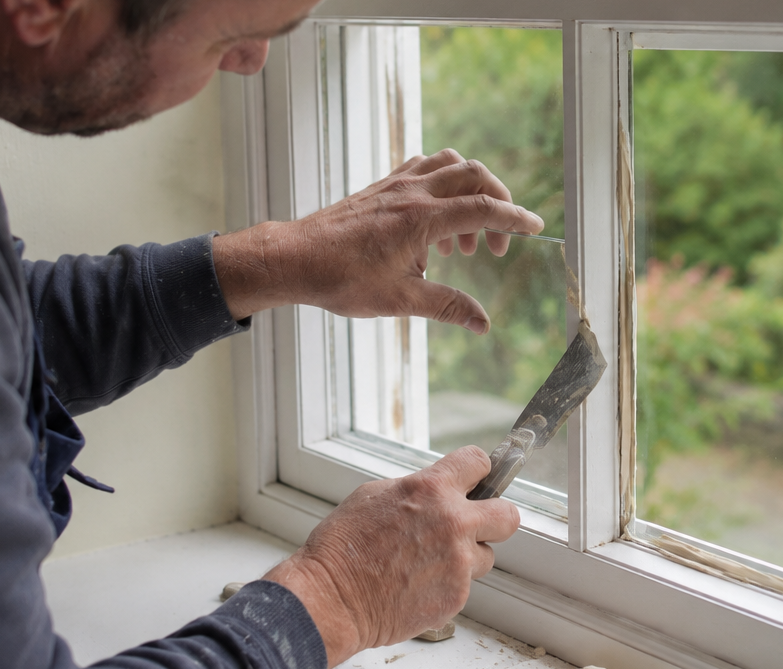
Remove old putty using a hacking knife or chisel. Work carefully to avoid damaging the timber rebate. A heat gun softens old putty significantly — five seconds of heat per section makes removal much easier. Pull out old glazing sprigs with pliers.
Clean the rebate thoroughly. Any remaining putty fragments will prevent the new pane seating properly.
Step 2: Prime the Rebate
Bare timber absorbs oil from putty, causing it to dry too quickly and crack. Brush a thin coat of primer or linseed oil into the rebate and let it dry. This step takes ten minutes but adds years to the putty’s life. Skipping it is the most common DIY mistake.
Step 3: Bed the Glass
Roll putty into a thin sausage (about 5mm diameter) and press it into the rebate all the way round. This “bedding putty” cushions the glass and creates a weather seal behind it.
Place the glass into the rebate, pressing gently around the edges — never in the centre. The glass should compress the bedding putty to roughly 2mm thickness. You should see putty squeezing out behind the glass on the inside.
Step 4: Secure with Sprigs
Push glazing sprigs into the timber at roughly 200mm intervals around the glass, flat against the surface. These hold the glass in position while the face putty is applied and cured. Use the side of a chisel to tap them in — don’t hit the glass.
Step 5: Apply Face Putty
Roll putty into a thicker sausage and press it into the angle between glass and frame. Using a putty knife held at about 45 degrees, smooth the putty into a neat triangular bead. The putty should not be visible from inside when viewed through the glass.
Aim for a clean, consistent angle. Don’t worry about perfection on the first attempt — putty can be reworked within about 30 minutes. After that it starts to skin over.
Step 6: Finish and Paint
Leave putty to cure for 7-14 days before painting. Paint should overlap onto the glass by 1-2mm to create a weather seal. Use a good quality exterior paint — the paint protects the putty as much as the timber.
Trim any excess bedding putty from the inside once the face putty is stable.
Modern Glazing Bead Systems
Many modern timber windows — including ours — use glazing beads instead of putty. The process is different and generally easier.
Removing Beaded Glass
Glazing beads are the timber mouldings that hold glass from inside. They’re usually pinned or screwed in place. Carefully lever each bead away, working from one end. Keep beads in order — they’re usually cut to specific lengths.
Remove the sealed unit. Clean the rebate and check the gaskets or setting blocks.
Fitting the Replacement Unit
Place new setting blocks in position (bottom edge and sides). Insert the sealed unit and press it gently into the frame gaskets. Refit glazing beads in reverse order, pinning or screwing as original.
Beaded systems are more forgiving than putty — and replacement units can be swapped again in future without the mess of hacking out old putty.
DIY vs Professional: Cost Comparison
DIY Costs
A single-pane replacement costs roughly £50-80 including glass, putty, sprigs, and primer. A sealed double-glazed unit replacement runs £80-150 depending on size and glass specification.
Professional Glazier Costs
Professional reglazing typically costs £120-180 per pane, including materials and labour. Emergency call-outs (broken glass requiring immediate boarding) add £50-80 on top.
When to Go Professional
Hire a glazier for safety glass in critical locations (they’ll ensure correct specification and provide documentation), windows at height requiring ladder or scaffold access, sealed units where precise measurement is critical, and any situation where FENSA certification might be needed for insurance or resale purposes.
Frequently Asked Questions
Can I replace double-glazed glass myself?
You can replace sealed units in timber windows with beaded glazing systems — it’s essentially removing beads, swapping the unit, and refitting beads. However, sealed units must be ordered to exact dimensions and may require specific glass types for Building Regulations compliance. Ordering the wrong specification wastes money.
How do I know if I need safety glass?
Building Regulations require safety glass (toughened or laminated) in critical locations: below 800mm from floor level, within 300mm of a door edge, and in bathroom glazing at low level. When replacing glass in these locations, you must use safety glass even if the original wasn’t.
What’s the best putty for timber windows?
Traditional linseed oil putty remains the standard for timber window glazing. It’s workable, long-lasting (20+ years when painted), and widely available. Don’t use frame sealant or silicone as a substitute — they don’t perform the same way and look terrible. Always prime the rebate first.
How long before I can paint new putty?
Allow 7-14 days for linseed oil putty to form a skin suitable for painting. Curing time depends on temperature and humidity — warmer, drier conditions cure faster. Don’t leave putty unpainted for more than a month or it will deteriorate.
Should I replace single glazing with double glazing?
If you’re reglazing a traditional single-glazed window, it’s worth asking whether the frame can accept a sealed unit. Many timber sash and casement windows can be adapted, though the rebate depth may need modification. The energy efficiency improvement is substantial. For some windows, full replacement may be more practical than adaptation.
Conclusion
Replacing broken glass in timber windows is manageable DIY for standard situations. The materials are inexpensive, the process is straightforward, and the result — when done carefully — is invisible.
Know your glass type before ordering, prime the rebate before bedding, and give putty proper curing time before painting. These three details separate a lasting repair from one that fails within a year.
For windows beyond simple reglazing — or when you’re ready for an upgrade to modern sealed units in bespoke timber frames — request your free quote and we’ll help you find the right solution.


Leave a Reply
Want to join the discussion?Feel free to contribute!